
Latest News
2026 Porsche Macan ReviewCollecting Vintage Gas Pumps
Vintage gas pumps have their place in auto history. We look at their 130-year evolution and how they've become a highly sought after collectible.
Collecting Vintage Gas Pumps
Take a look at the modern gas pump and you probably aren’t drawn to anything about it—the shapes, the aesthetics, and certainly not the price per gallon displayed. But take a look at a vintage gas pump and you’ll understand why they’re the focal point of many petroliana enthusiasts and collectors around the world. The unique designs of the early gas pumps grabbed the consumer’s attention and were a marketing tool in and of themselves.
While the push now is for electric vehicles and many automakers have plans to go fully electric over the next decade, we’re taking a step back today and enjoying the simplicity of a bygone era when gas was cheap and the pumps themselves were art.
We love talking about the history of cars—recall our articles on vintage car ads and old school car accessories—and today we’re diving deep into the gas pump. Keep reading to learn how the gas pump came about and what to look for if you want to start your own vintage gas pump collection.
Who Needs Gas, Anyway?
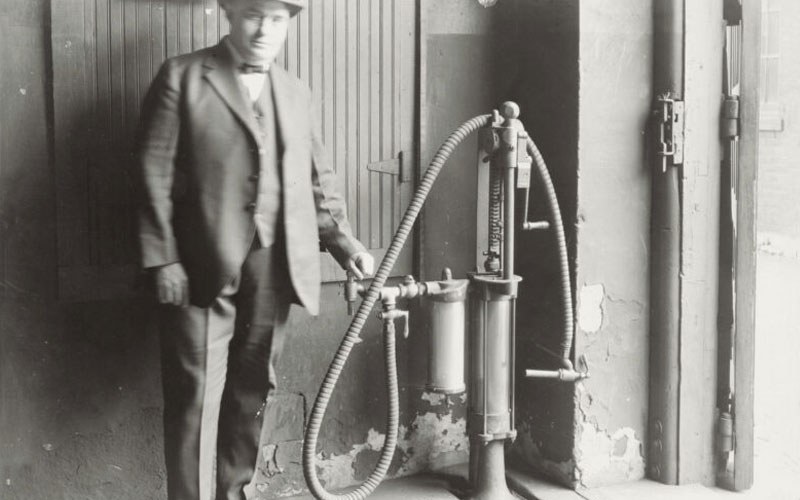
The first gasoline pump came at a time when gasoline wasn’t even in high demand. Gasoline was a byproduct of kerosene and was often discarded, while the kerosene was used for cooking, heating, and lighting.
Kerosene was sold at the local grocery or hardware store, and the clerk would have to ladle it from the store’s barrel into the customer’s canister. This dispensing method was not only messy and wasteful but could be dangerous as well.
The Filling Station
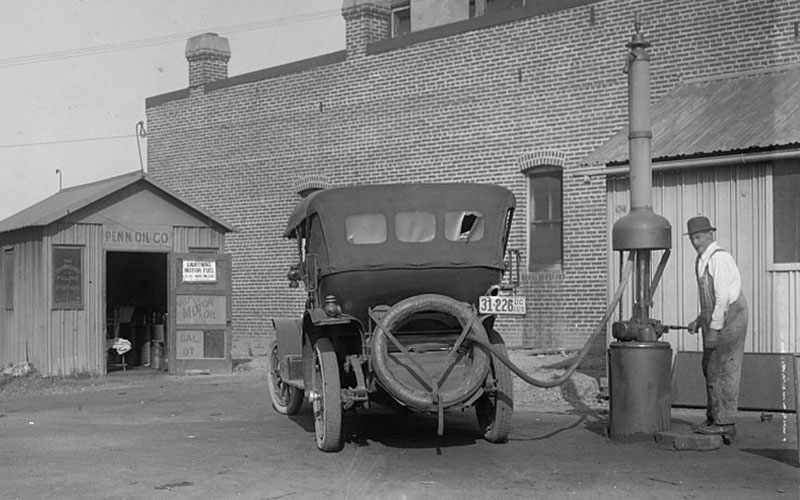
In 1885, months before Karl Benz would develop the first gas-powered automobile and more than two decades before the Ford Model T, a man by the name of Sylvanus Freelove (S.F.) Bowser of Fort Wayne, Indiana, set out to find a method to dispense kerosene in a safer, more efficient way. He invented a device which was later patented that would pull the kerosene from barrels into the customer’s canister.
These first pumps would become known as “filling stations,” and by the 1890s Bowser had adapted his invention to pump gasoline as well as kerosene. A hose and eventually a nozzle were added to the pump and he began selling his “filling stations” to general stores and the first automobile repair garages beginning in 1893.
Cylinders and Clocks
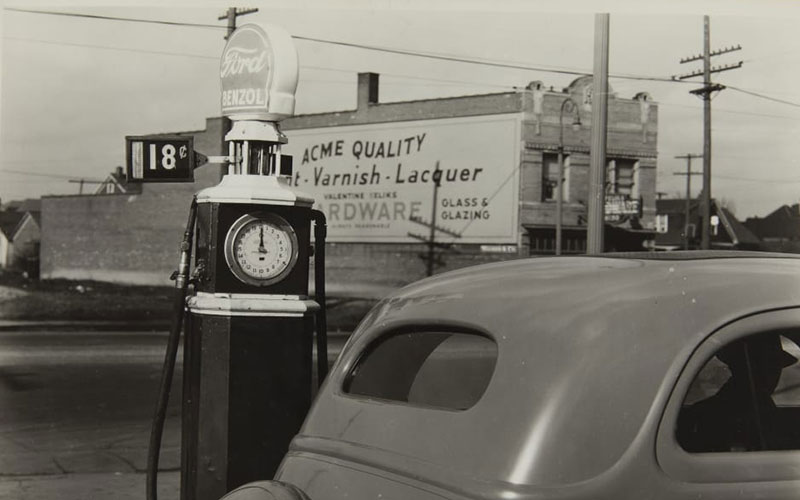
Over the next two decades, the gas pump would evolve into being able to measure the amount of gas being pumped, which made dispensing the fuel and charging the customer a much easier task.
A large clockface was added to pumps to measure the amount of gasoline being pumped and clear glass cylinders were added.
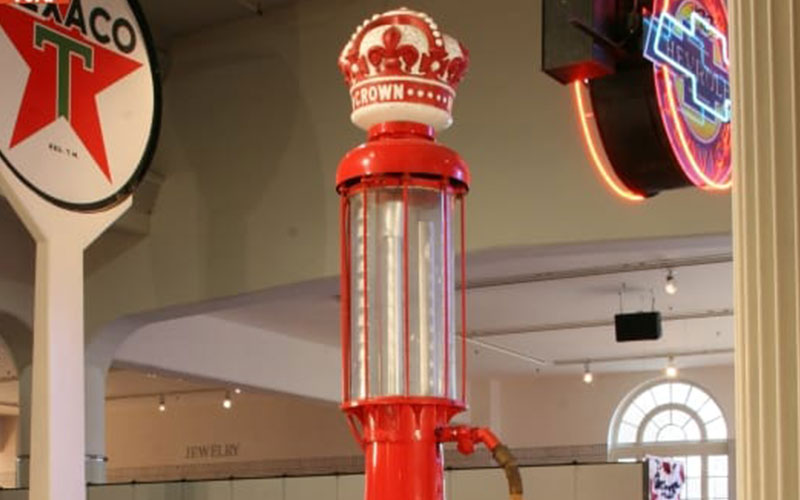
These cylinders held 5 or 10 gallons of gasoline and not only indicated which pumps were stocked and ready for use, but also gave the customer assurance that the gas they were getting was clean.
Come to the Light

With more and more automobiles on the road, pumps had to be pushed farther away from the curb and the gas stored underground to make room for busier streets. Pump designers competed for the sale by adding bright colors and attention-grabbing designs to attract consumers to gas stations.
Ornate globes were added to the top of the pumps and helped to advertise the gasoline’s manufacturer. They also put off much-needed light in a time of very few streetlights and served as a beacon to travelers in need of fuel. These decorative globes were added in the 1910s and would remain through the 1950s.
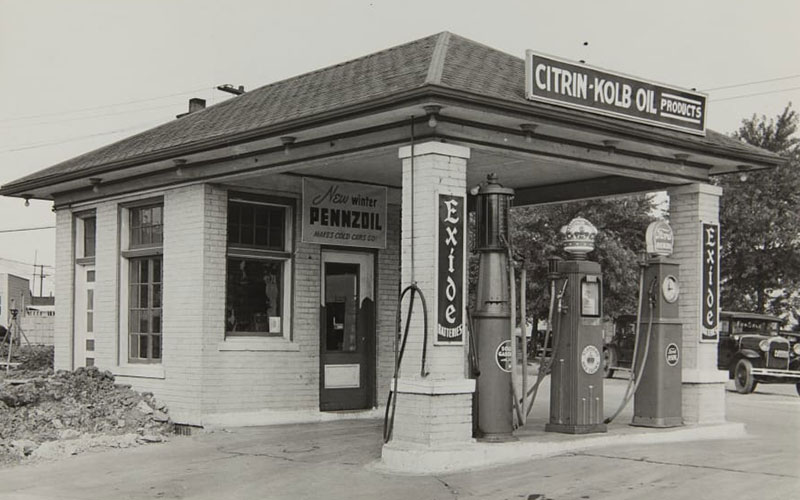
By the 1930s the visible cylinders were replaced with a smaller version that had a hose connected to the bottom which fed the gasoline into the automobile’s tank. Referred to as “sight glasses,” these smaller cylinders came about because of consumers’ increased confidence in the gas pump retailer. Consumers were beginning to trust that the amount they were paying for was accurate and that the gasoline was clear.
A Movement in Color
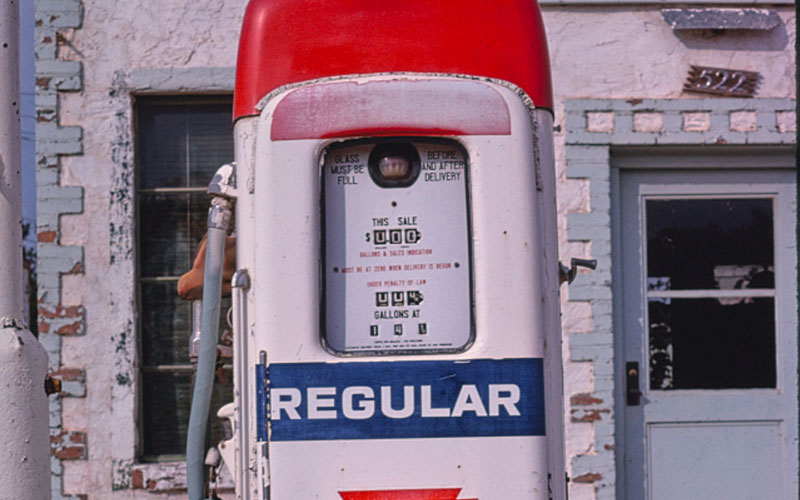
In 1934 the Wayne Pump Company developed a computer meter that replaced the clock-face style with a more digital form where the amount of gallons pumped and the computed prices were displayed directly on the face of the pump. By the late ‘30s all companies were using the computer meter. This was also during the Art Deco movement and the modern style even influenced the gas pumps. They became geometric in shape with stepped and vibrant patterns on stainless steel.
After World War II, cars got lower which made viewing the gas pumps difficult. As a result, the gas pumps became shorter as well and featured stainless steel trim, rounded edges, large meter faces, and an overall simpler design than what was seen in the Art Deco designs of the 1930s.
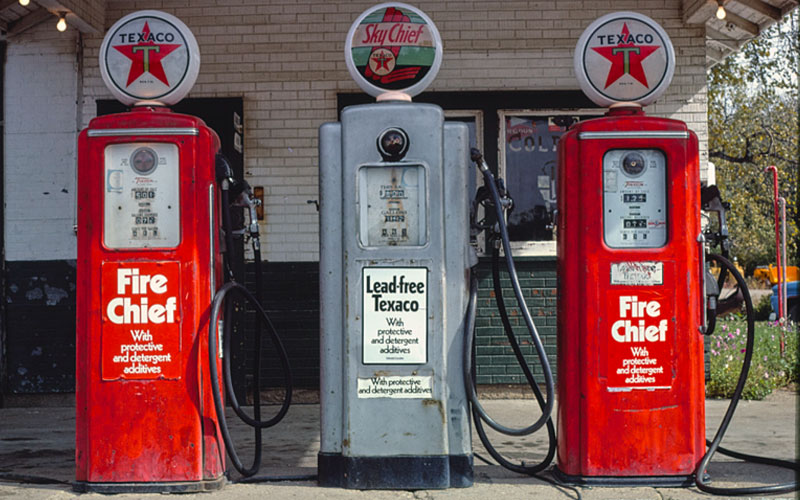
In the 1950s the design of the pump moved toward stainless steel and away from rounded edges. The hardware was square in shape, shorter, and featured unpainted, stainless-steel surfaces. The top of the pump was larger, lending to a narrower, tapered base.
The Thrill of the Hunt
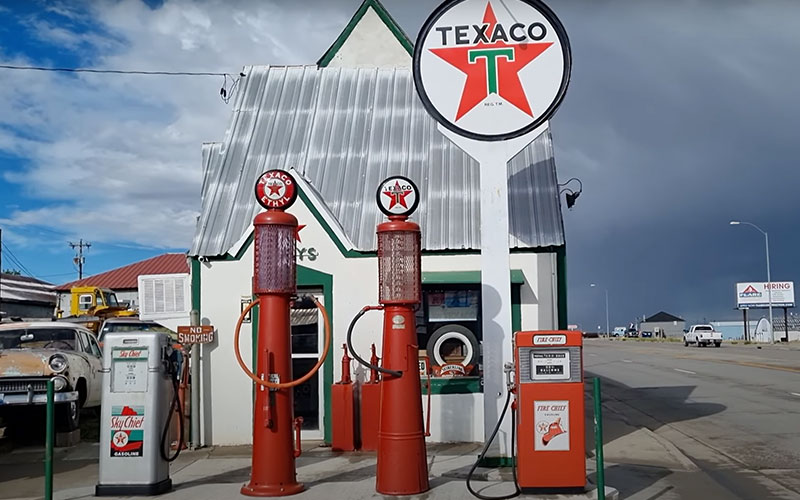
The evolution of the gas pump over the last 130 years with its variety of designs, brands, and hardware has created an entire world of petroliana memorabilia. Knowing what to look for is key in ensuring a vintage gas pump is valuable, authentic, and not beyond restoration.
The brand of gas, color of the pump and era of origin are a few factors to consider. There are many brands out there, some more rare and valuable than others. Red Indian, Gilmore, Texaco, and Mobilgas are among some of the most popular.
For the most valuable vintage gas pumps it’s best to seek brands that did not have a nationwide reach. The color of a pump is a good indicator of its age. Vintage gas pumps with minimal color are typically from the 1910s, while bright, bold colors hail from the 1920s and 1930s.
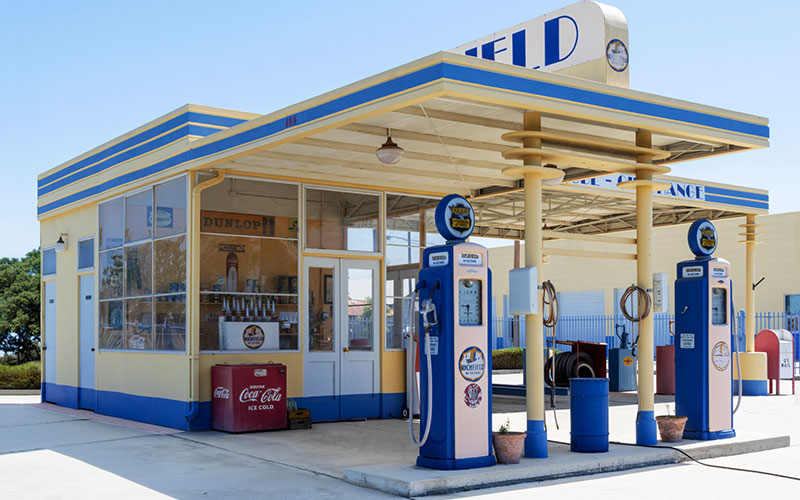
The more elaborate the design and intricate the colors, the more likely the pump is to be a rare and valuable item. The era a pump is from will significantly influence its overall value. Some of the most sought-after vintage gas pumps are early models with the large cylinders and clock face.
Now that you know what to look for, where should you go to find the next addition to your vintage gas pump collection? You can start with local auctions and eBay, but the online petroliana community is going strong and there are many online forums to get you connected to some of the rarest vintage gas pumps out there.
Swap meets are another great way to add to your collection and meet other vintage gas pump enthusiasts while you’re at it. After all, part of the thrill of the hunt is who you’ll get to meet along the way! Happy hunting!