Latest News
2026 Buick Envista ReviewThe Coolest Sports Car Concepts We Never Got

Concept cars have offered tantalizing glimpses into the future of the automobile for decades. These are the best sports car concepts we never got.
Real Dream Cars
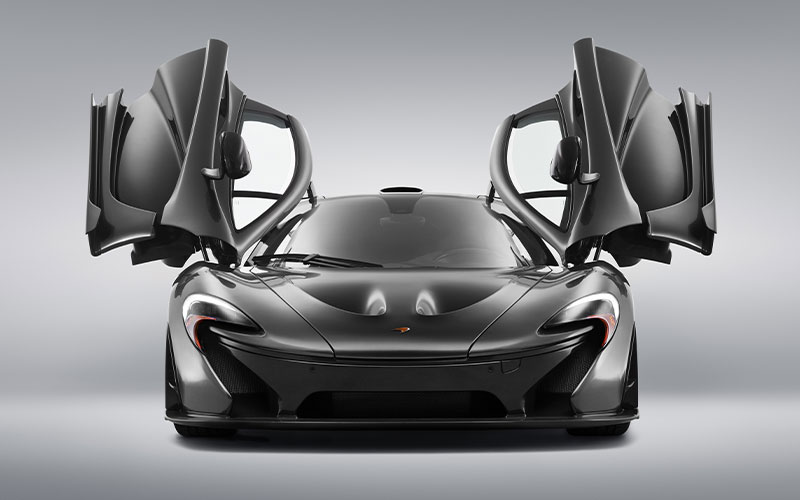
The concept car is where the imaginations of engineers and designers are allowed to run wild. They serve the dual purpose of testing new automotive technology and garnering the attentions of the public with audacious, often consciously futuristic designs. Some lucky concept cars like the McLaren P1, Lexus LFA, and Porsche 918 make it to production, but they are the exception that proves the rule. Most concept cars are never intended for production at all, instead serving their purpose of pushing a company’s engineering and design teams to new heights. Below we trace nearly 90 years of concept car designs from their earliest incarnations to today’s latest inspirational designs.
Harley Earl and the Buick Y-Job
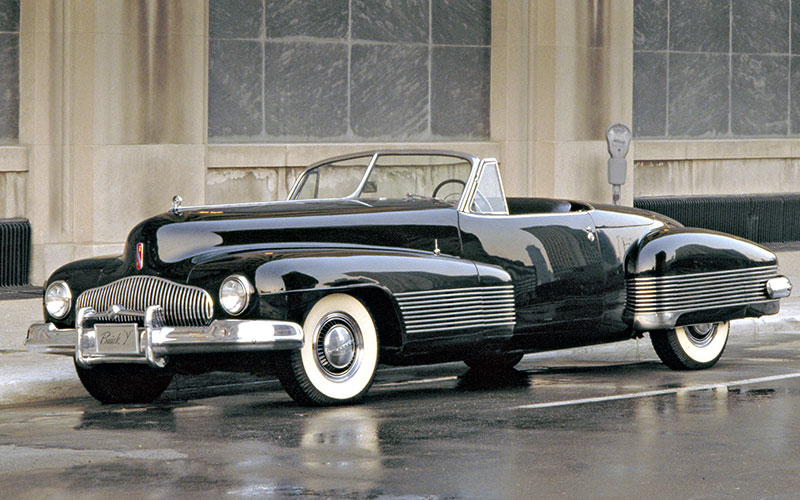
Buick Y-Job
By many accounts, the concept of a concept car began with GM’s designer extraordinaire Harley Earl. In the late 1930s, Earl envisioned a car that could stoke public excitement with a forward-thinking design and the latest innovative automotive tech. The Buick Y-Job (one letter beyond eXperimental) was pitched in 1938 as “The Car of the Future,” and it indeed it was. The boattail rear end might have jived with high-end luxury cars of the 1930s, but the aeronautically inspired curves and wrap-around chrome bumpers presaged the advent of slipstream body styles of the late ‘40s and ‘50s. New tech on the Y-Job included hidden, powered headlights, a power retractable convertible roof, power windows, and flush door handles. After wowing audiences and press around the country, the Y-Job did years of service as Earl’s personal car.
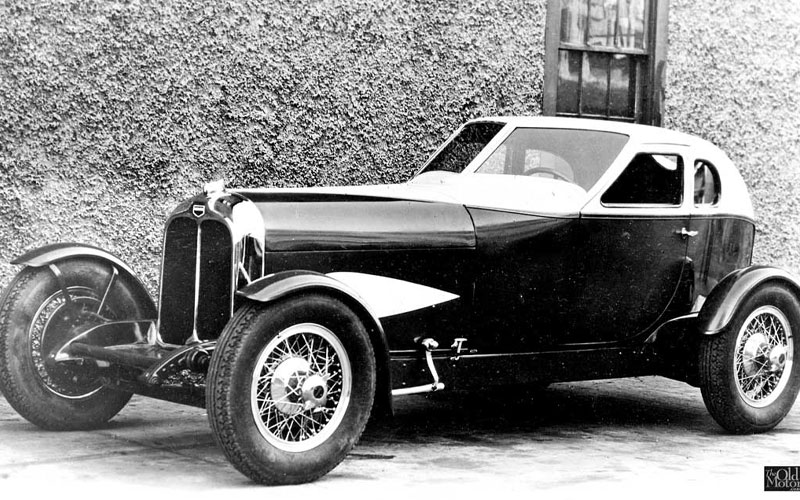
Auburn Cabin Speedster
Though most deem the Y-Job the first concept car, some look back a decade earlier to the Auburn Cabin Speedster, a coupe version of Auburn’s Speedster, which debuted in 1929. The Cabin Speedster was a one-of build that was unfortunately destroyed in a fire at the LA Auto Show, that claimed dozens of cars.
Jet Age Concepts
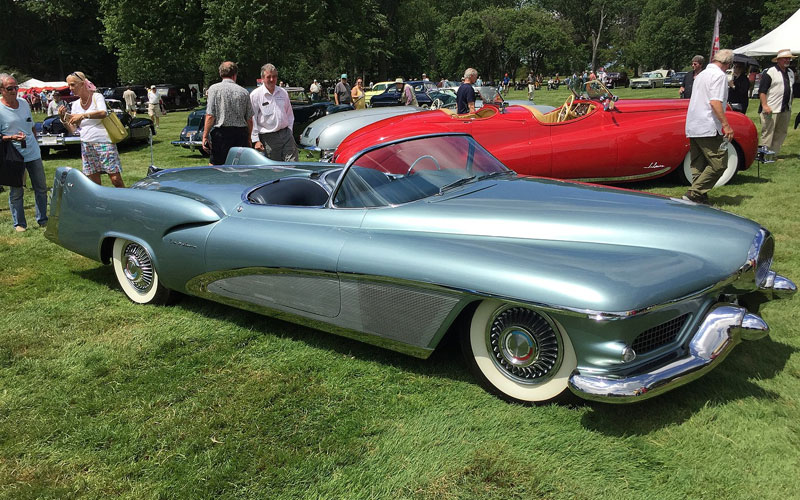
GM La Sabre
Harley Earl’s influence on automotive design came into full fruition in the 1950s. GM production cars like the C1 Corvette and Cadillac Eldorado were all about curves and chrome, but Earl’s concept work pushed the envelope much further with designs that directly referenced the air and space designs of the day. One of his early Jet Age concepts was the GM La Sabre from 1951. The La Sabre was a two-seat roadster directly emulating aeronautic designs, including a simulated central jet intake and exhaust. The car incorporated many elements that would find their way onto 1950s road cars, including big chrome bumpers complete with protruding Dagmars, big rear fins, and integrated tailpipes.
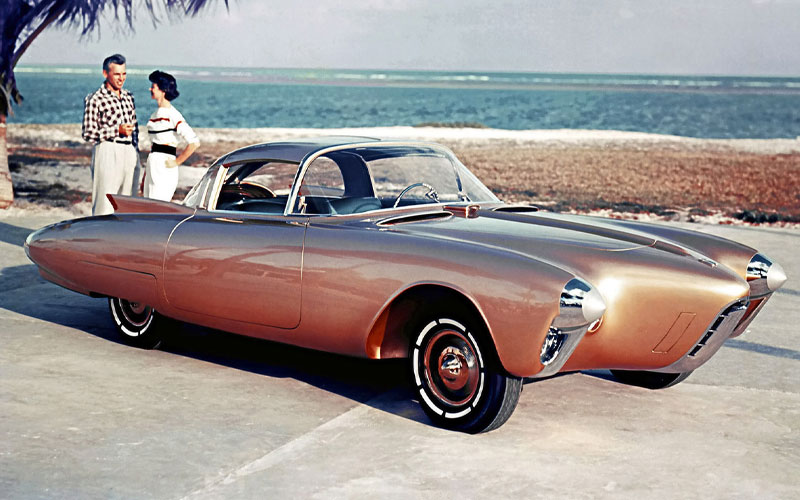
Oldsmobile Golden Rocket
The Oldsmobile Golden Rocket concept of 1956 was another Earl Jet Age design with rocket-like fenders and a fiberglass body. The Golden Rocket featured a split rear window design that was eventually incorporated into initial iterations of the C2 (second generation) Corvette.
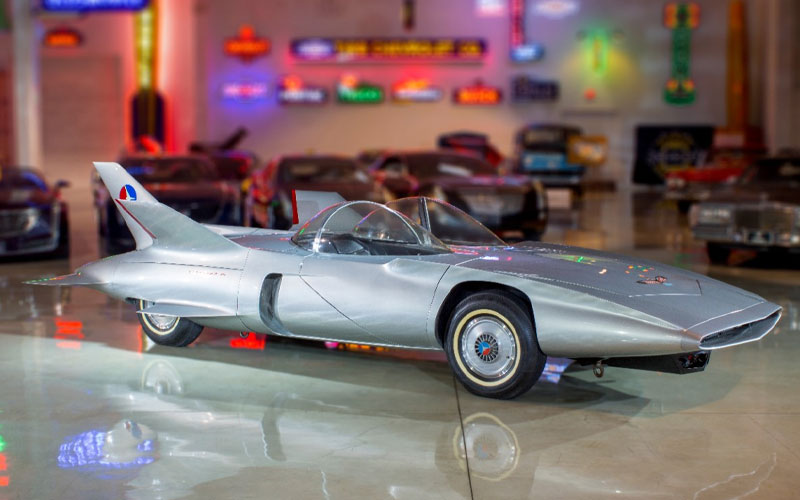
Firebirds I, II, III, and IV
The most on-the-nose Jet Age designs from Earl and GM were the Firebird concepts built for GM’s recurring Motorama car shows. Starting in 1953, the Firebird I had a very rocket-like design, looking very much like it was intended to set land-speed records at the Bonneville Salt Flats. The Firebird II arrived in 1956 with a titanium body and bubble top canopy. The 1958 Firebird III opted for a double bubble design, butterfly doors, and three massive rear fins. A follow-up Firebird IV concept was created in 1964, pitched with a turbine engine though the show car lacked any actual powertrain.
Coke Bottle Curves
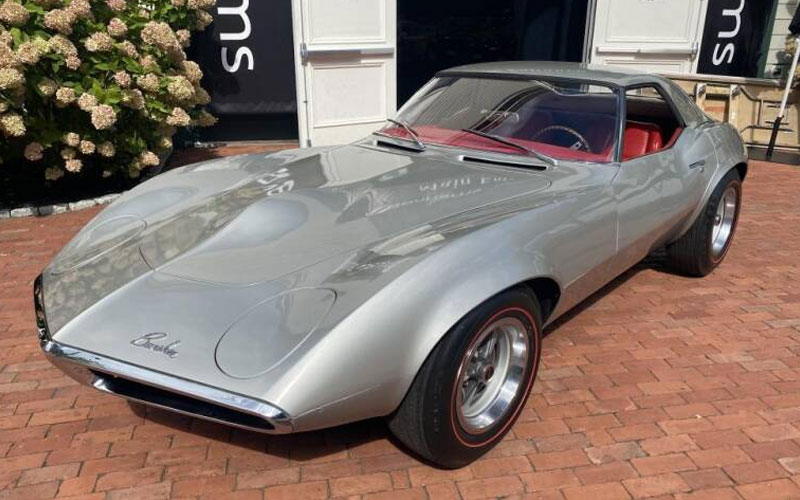
Pontiac Banshee
The 1960s turned the page on the chrome and fins of the 1950s. Trading those baroque designs for simpler, straighter lines, with the transformation of the late ‘50s to early ‘60s Lincoln Continental as an instructive example. By the middle of the decade, however, subtle curves were making a comeback with the advent of the “coke bottle” look, contours that emulated those of a glass soda bottle. The Pontiac Banshee concept, the brainchild of John DeLorean, debuted in 1965 as a major leap forward in design. It’s coke bottle curves and fast back rear end gave made the Banshee looks a decade ahead of its intended competition, the newly debuted Ford Mustang. Sadly, the Banshee never made it to production. GM lore has it that executives at Chevrolet didn’t want an in-house competitor to their flagship Corvette.
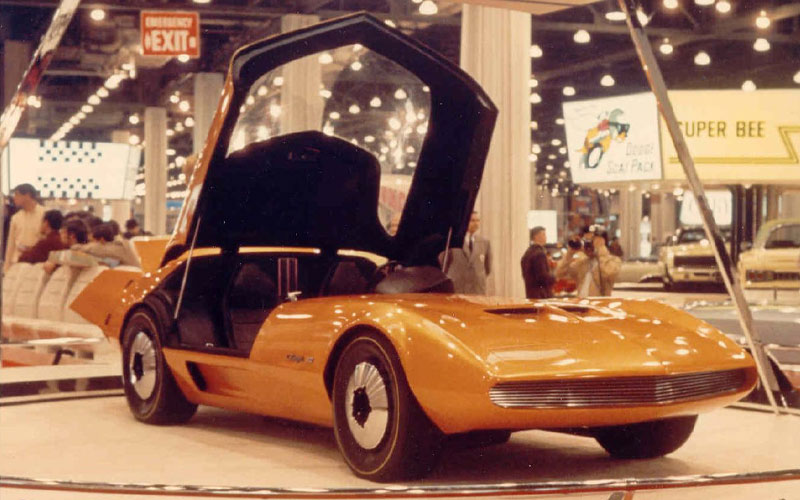
Dodge Charger III
The Dodge Charger III of 1968 bridges the gap between the coke bottle designs of the 1960s and a new vanguard of wedge designs coming out of Europe. The Charger III was a styling exercise of the highest order. It featured a racecar-like low front deck and high rear end, with shades of the Daytona Cobra in profile. Ingress and egress involved a radical cockpit canopy that opened up and back. The Charger III was billed as “aerodynamically the most efficient car designed and built by Dodge.” If the wrap-around, one-piece windshield/side windows and canopy weren’t audacious enough, Dodge added a show-stopping series of air brake flaps to the rear of the car.
Wedge Car = Supercar
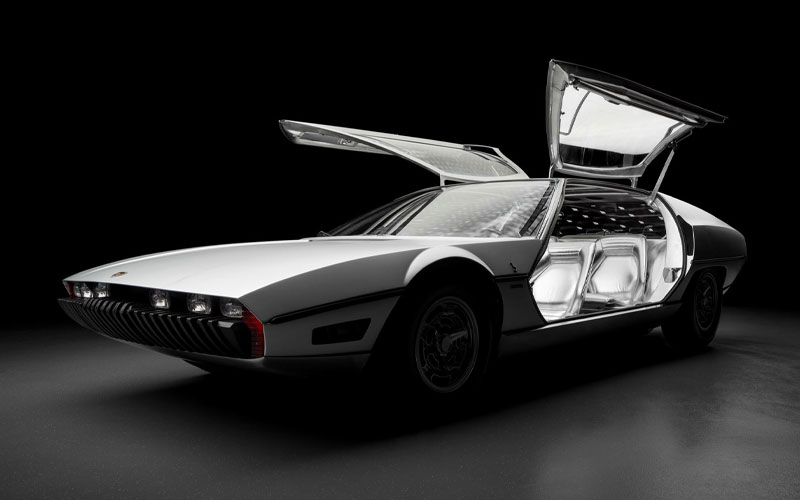
Lamborghini Marzal
The wedge car craze, one design which we’ve never quite gotten over, began in Europe in the late 1960s. Giorgetto Giugiaro’s work for Ghia are some of the era’s best remembered wedge designs, including the Alfa Romeo Iguana concept, Maseratis Ghibli, Bora, and Boomerang. But it was Marcello Gandini’s design of the Lamborghini Marzal in 1967 that many heralded as the first of the wedge cars. And it wasn’t just the radically raked front angle that made the Marzal dazzle. The four-seater had gullwing transparent doors. In total, the car enclosed the cabin in an impressive 48 square feet of glass. The Marzal’s DNA is evident in the later Lamborghini Espada.
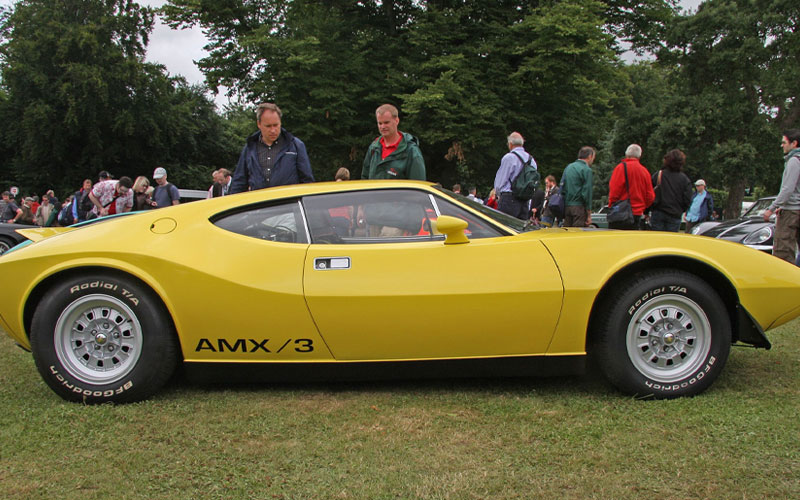
AMC AMX/3
Wedge car designs were not the sole province of Italian sports cars. AMC, ever ambitious despite their small size, sought new in-roads to the youth market with a radical sports car design that emulated those of Europe. AMC’s Dick Teague came up with the AMX/3 concept, a mid-engine V8 sports coupe. The AMX/3 was an international collaboration with its frame designed by Giugiaro’s Italdesign, the suspension conceived by famed engineer Giotto Bizzarrini (formerly of Ferrari), the prototypes were built by Coggiola, a Turin-based coachbuilder, and final testing and chassis tuning was done by BMW. Despite all this effort, just six AMX/3s were completed and the project abandoned as too expensive for a struggling AMC to execute.
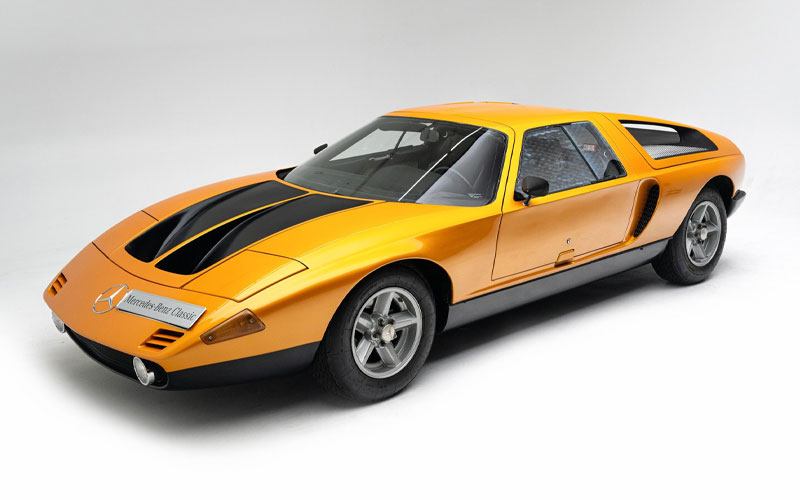
Mercedes-Benz C 111-II
Neither were wedge designs just an Italian phenomenon. The Germans had a go with the Mercedes-Benz C 111-II starting at the Frankfurt Motor Show in 1969. The C 111-II was powered by a series of engines starting with a three-rotor Wankel, then a more powerful four-rotor version, a five-cylinder diesel, and finally a V8. The orange wedge concept was the inspiration for a modern-day follow-up, the all-electric Vision 111 concept.
‘80s and ‘90s Wild Concepts
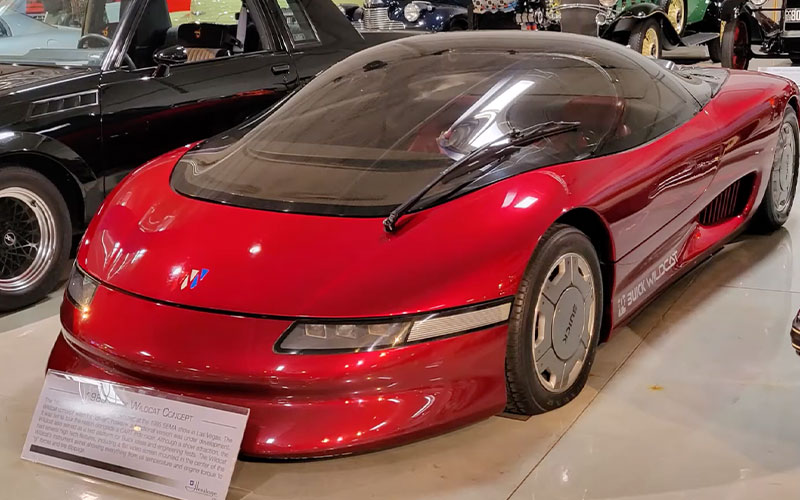
Buick Wildcat
Prior decades had plenty of compelling show cars, but the 1980s and ‘90s feature some of the most innovative and imaginative designs of all. The Buick Wildcat from 1985 took the nascent trend of jellybean aero and turned it up to 11. The Wildcat’s shape lent it a drag coefficient of just 0.28. Like some of the above concepts, the Wildcat had an elevating canopy. Directly behind this was the Wildcat’s exposed rear-mounted 3.8L V6 feeding power to all four wheels. The Wildcat’s name refers back to the Buick coupe from the 1960s. It was later used on the Buick Rivera Wildcat and the recent Wildcat EV concept. For a name that flies in the face of Buick branding, they’ve sure used it a lot.
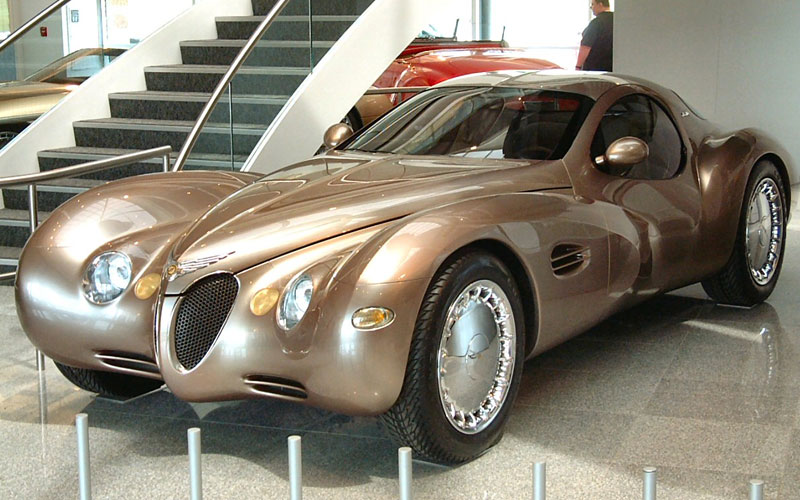
Chrysler Atlantic
Retro styling was all the rage among car designers in the 1990s and early aughts. Take the Chevy HHR, Plymouth Prowler, and Chrysler PT Cruiser as memorable instances. Another, lesser known but no less of a throwback was the Chrysler Atlantic. The Atlantic was inspired by a trip Chrysler head Bob Lutz took to Europe where he encountered 1930s classics like the Bugatti Atlantic 57S. The connection between the Bugatti Atlantic and the Chrysler concept is clear, from the tall prominent fenders to the rear split window. The Atlantic even got a vintage style 4.0L straight-eight made by stitching together two four-cylinder engines from the Dodge Neon.
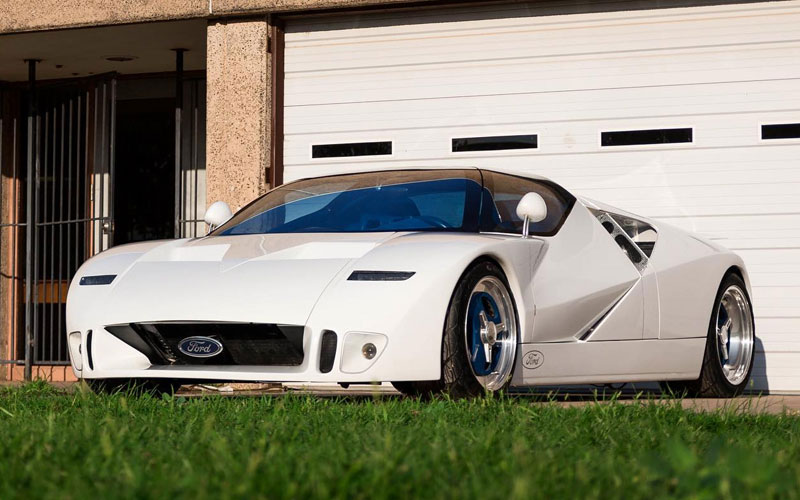
Ford GT90
The Ford GT90 concept from 1995 was a reimaging of the legendary Ford GT40 as a modern supercar. Developed by Ford’s Special Vehicle Team (SVT), the GT90 would be a midengined car like its namesake. To do that, designers looked to the Jaguar XJ220’s platform (Ford owned Jaguar at the time). For power, the GT90 used two Lincoln V8s with four cylinders chopped off. The resulting 5.9L V12 was given four turbochargers and made a neck snapping 720 horsepower. Though the GT90 was a one-of build and never made it to production, the Ford GT40 did get a new version in the Ford GT which debuted in 2004.
Awesome Concepts of the Aughts
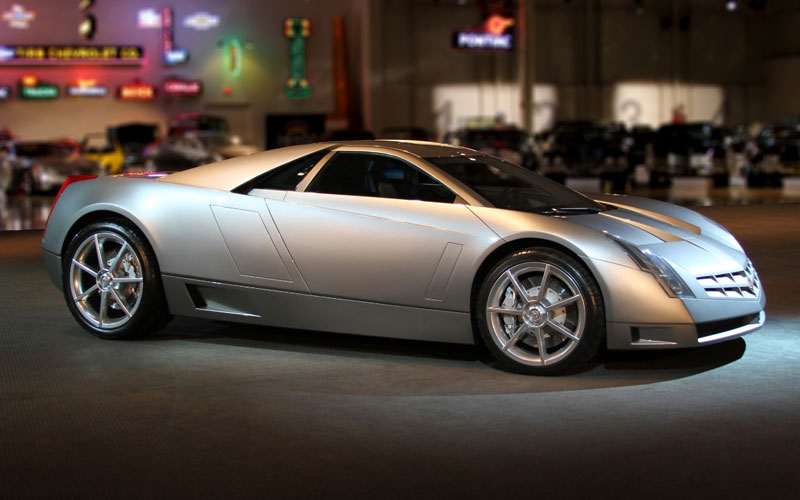
Cadillac Cien
The 21st century has seen more than its share of eye-popping concept cars. One early example is the Cadillac Cien from 2002. The Cien was a midengined design, presaging the C8 Corvette by more than a decade, with proper supercar scissor doors and a sharply creased body that was inspired by the F-22 fighter jet. Sadly, the Cien’s projected sale price of over $200,000 made it too expensive even for Cadillac’s customer base.

Mazda Furai
From 2007, the Mazda Furai was the automaker’s racecar concept featuring a rev-happy 2.0L Wankel rotary engine making 450 horsepower. The Furai, who’s name translated to the “Sound of the Wind,” never made it to production, but it did make numerous video game cameos including Gran Turismo and Forza. The one-of concept was destroyed when the engine caught fire while filming a Top Gear segment in 2008.
Recent Concepts
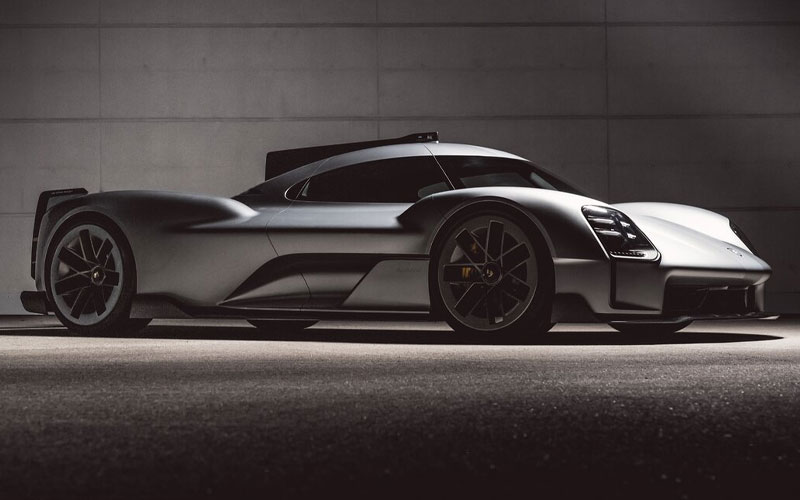
Porsche 919 Street
Sports car concepts have gotten no less fantastic or fantastical in recent years. While the majority of concept cars are created with a public showing in mind, some, like the Porsche 919 Street, are testcases for internal eyes only. The Porsche 919 Street puts the concept in concept car as it was only ever finished as a full-size clay model. The idea behind it was to envision a street-going version of the Le Mans-winning Porsche 919 hybrid racecar. Porsche revealed the stunning 2017 concept in 2020 as part of their 20th anniversary celebration of the Carrera GT supercar.
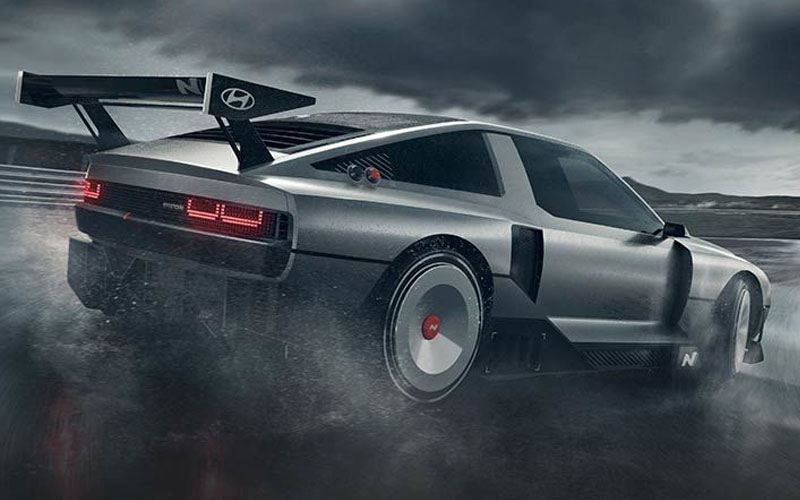
Hyundai N Vision 74
Our final concept is exceptional in two ways: first and most obviously the Hyundai N Vision 74 is a beautiful and innovative car (how so, we’ll touch on in a moment), but secondly, the N Vision 74 is exceptional because, unlike all the other cars on this list, it is actually planned for production. Hyundai says they will produce a limited 100-car production run of this ultra rad throwback. The N Vision 74’s design and name reference back to the 1974 Hyundai Pony coupe, designed by the above mentioned Giorgetto Giugiaro. You might see a bit of the DeLorean DMC-12 in the car’s blocky paneling, another of Giugiaro’s designs. The N Vision 74 isn’t just a styling exercise however, it is also a testbed for a hydrogen hybrid powertrain that pairs a hydrogen fuel cell with two electric motors (one at each rear wheel) for a combined 800 horsepower. Power, speed, cutting edge tech, and a head turning design make the Hyundai N Vision 74 one of this decade’s most inspiring and impressive concepts. One that’s all the more compelling knowing it will actually make to production.