Latest News
2026 Ford Maverick ReviewHow Ferdinand Piech Changed Cars Forever
Ferdinand Piech might not be a familiar name, but you know the cars and companies he reshaped from Porsche to Audi to Volkswagen.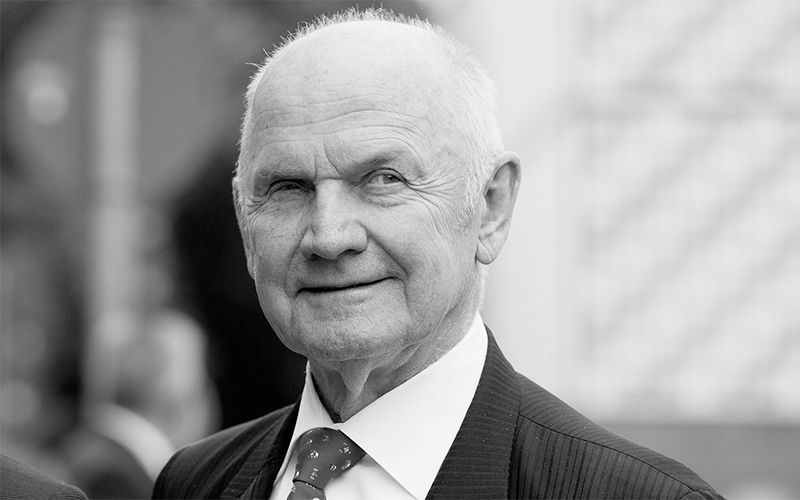
Automotive Expression
In literature, it’s called the death of the author, the idea that a creation ought to stand on its own merits, divorced from the biography of its creator. While that may or may not be a fruitful way to look at literature, it’s decidedly not how we tend to look at the history of cars. Cars, like books, are inextricably the expression of the people who conceive of, design, and build them. We call mass market commuters uninspired when the committees, marketers, and bean counters have sanded away the human edges to leave mere commodity behind.
When we look at the cars of Carroll Shelby, the AC Cobra, the GT40, the Mustangs, we get a sense for Shelby’s passion. We intuit an ethos of speed, a zeal for winning. Same for Soichiro Honda and Ezno Ferrari. Koichiro Toyoda put his personal stamp on the eponymous company and changed the way cars are built, just has Henry Ford had decades prior. Executive Lee Iacocca oversaw sea changes in customer expectation, reshaping our desires along the way.
While the above collection of automotive luminaries might be household names, the most influential and impactful automotive leader of the past half century, one Ferdinand Piech, is not. You might not know the name, but you undoubtedly know the work. Piech ensured the Porsche 911 was race-worthy, oversaw the 917’s rise, he took Audi from rudderless to world beater, and grew VW Group into an automotive titan. Below we’ll look back at the remarkably influential career of Ferdinand Piech.
Taking Porsche Racing
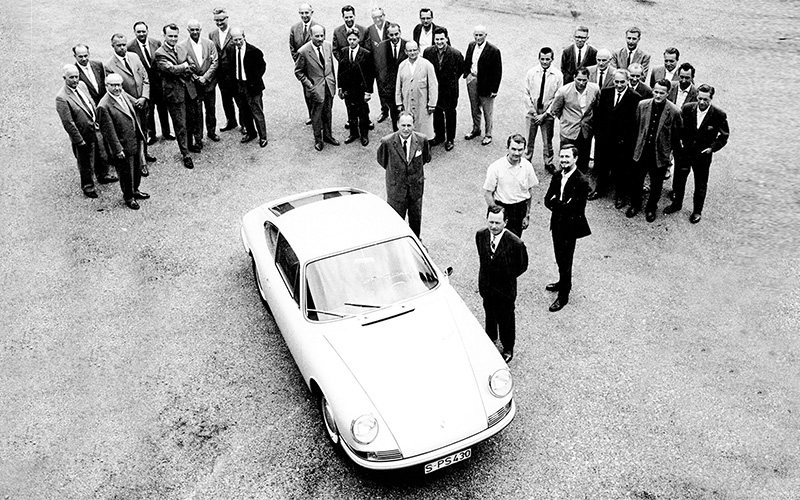
Central to any biography of Ferdinand Piech is his lineage as he was the grandson of Ferdinand Porsche, creator of the Volkswagen Beetle, nephew to Ferdinand “Ferry” Porsche, creator of the Porsche 356, and cousin to Ferdinand “Butzi” Porsche, designer of the Porsche 911. (Phew, that’s a lot of Ferdinands, no?) Piech schooled in Switzerland taking a degree in mechanical engineering in 1962. Finding work in aeronautic in German at the time proved challenging and Piech took the next logical path, a position at the family business – Porsche.
There the newly minted engineer was assigned to the racing department just as the 911 was nearing completion. Piech’s first contribution proved decisive as he became adamant the new car’s 2.0L flat-six engine needed a dry sump lubrication system if Porsche wanted to make good on their racing ambitions. The 911 was a mere six months from completion and yet Piech managed to convince lead engineer Hans Mezger and Ferry Porsche of the necessity of the change.
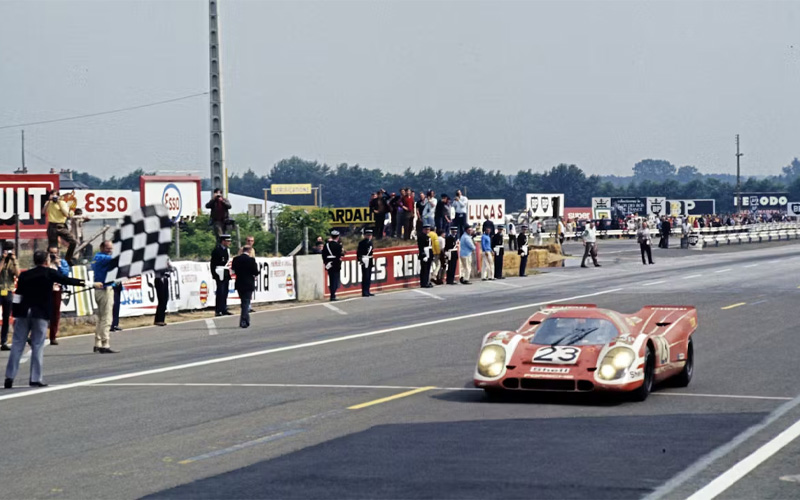
Piech managed to parlay the success of the 911 project into heading up Porsche’s racing division. There he oversaw the development of a generation of Porsche racing cars including the 906 and 908. And while those cars were successful in competition, the crown jewel of the racing world, the 24 Hours of Le Mans remained elusive for Porsche. Recall this is the period of dominance by Ferrari and then Ford at Le Mans in the 1960s.
Piech’s pitch to win Le Mans was a clean sheet design, a new car built with that expressed purpose. Aiming for the 1970 Le Mans race, the new 917 project had just a 10-month turnaround from the prior 908 car. To compete with Ferrari’s V12s and Ford’s V8, Hans Mezger combined two flat-sixes for a new 4.5L flat-12 engine making a highly competitive 520 horsepower. The new car and new engine proved enough for Porsche to take Le Mans back-to-back in 1970 and 1971.
Despite the successes, all was not rosy at Porsche. The third generation of the Porsche dynasty, of which Butzi Porsche and Ferdinand Piech were part, comprised much of the upper management at the company. In-fighting and complicated family dynamics (Piech had an affair with and eventually married his cousin’s wife) threatened the very foundations of the company. At the behest of Piech’s mother and management consultants, the Porsche cousins collectively stepped down from their direct management roles, Piech included.
Making Audi, Audi
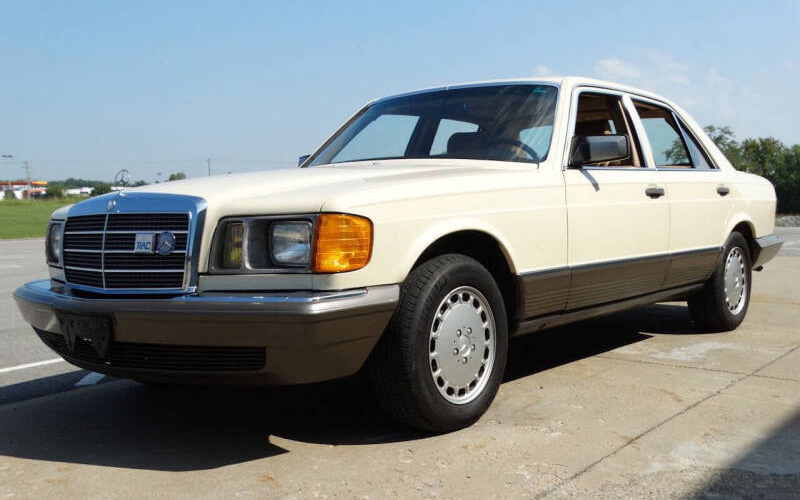
Leaving Porsche, Piech started his own engineering consultancy, and his first major client? Mercedes-Benz. They were looking to leverage Piech’s engineering prowess for their new diesel engine. That engine, the OM617, was developed from Mercedes’ OM616 four-cylinder engine with the one critical addition being an extra cylinder. The OM617 was the first production five-cylinder engine, debuting in 1976, and would make history again a few years later when it was turbocharged, making it the first turbodiesel production engine in 1978. Those Mercedes-Benz turbodiesels became a byword for durability and longevity. Mercedes-Benz was so impressed with Piech’s work on the diesel five-cylinder that they offered him the chance to be next in line as head of R&D.
Piech, barely 30 years old, declined what might have been to any other German engineer the opportunity of a lifetime. Instead, Piech took a job at Audi, not yet ten years old itself, having been formed from the merger of Auto Union and NSU. Piech was made head of special projects at Audi, putting him in charge of both racing development and R&D.
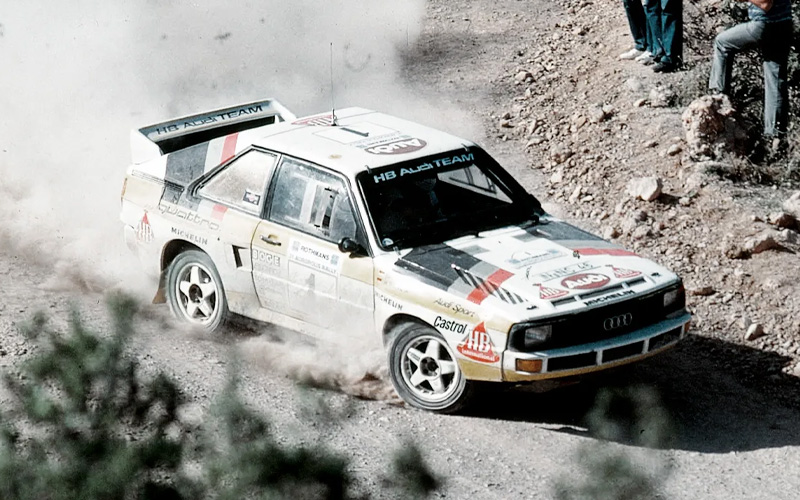
At the time, Audi was working on a Wankel rotary engine, but Piech quickly identified that the challenges involved in making a rotary work and nixed the engine. A regular four-cylinder would be too close to what Mercedes and BMW already had in the market and Audi’s cars didn’t have room for a straight-six nor was engineering a new V6 in the cards. Instead, Piech took a page from his own book and added a cylinder to the existing four-cylinder. The new five-cylinder was another first, the first turbocharged five-cylinder gas production engine.
Recall that Piech had made his name in racing. Therefore, with the reigns at Audi firmly in hand, Piech set about targeting Group B rally and Trans Am racing. Central to that effort was the development of a bit of tech that has become synonymous with the brand, the quattro all-wheel drive system engineered by Jorg Bensinger. If you’re familiar with rally racing even a little, you’re probably aware the resulting Audi Quattro rally car is unquestionably rally’s most famous and revered car, winning manufacturers’ title in 1982 and 1984. By 1988, Piech had been elevated to Audi’s CEO and under whose watch the company developed yet another game-changing technology TDI, turbocharged direction injection.
Volkswagen Conglomerates
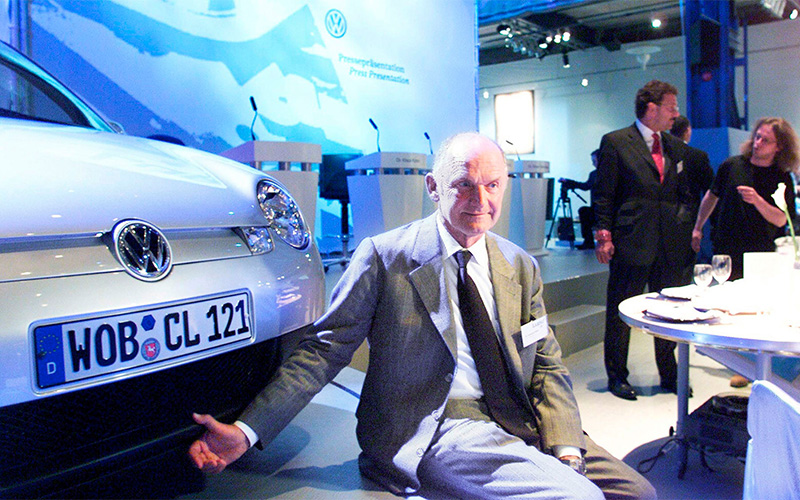
It was only a few years later that Piech was elevated once again, from Volkswagen’s subsidiary to VW proper, where he was given the helm in 1993. At the time, Volkswagen was struggling for profitability and bankruptcy loomed. Piech managed to right the foundering company based largely on a unique spin on a time-tested strategy.
Economies of scale, that is the reduction in overhead costs as volume rises, have long been at the center of automotive manufacturing. Henry Ford’s quip about the Model T that you can have any color as long as it’s black, nods to this concept. Traditionally, car companies employed economies of scale by engineering their base car, for instance GM’s Chevy 210 in the 1950s, and from that basic architecture all higher trims and brands were scaffolded. Trim pieces and body panels changed but the frames and engines remained largely the same.
Piech’s governing philosophy had always been more is more and so it was at Volkswagen that resources were spent on properly engineering scalable components from the top down rather than the bottom up. If part was good enough for Bentley it was good enough for Audi and certainly for Volkswagen. Speaking of Bentley, Piech other big move was snapping up storied but struggling car brands and making them profitable. Not only did Volkswagen buy Bently they also bought Skoda, Seat, Scania, Lamborghini, as well as the truck and bus maker MAN and Ducati motorcycles.
Piech’s Perfectionism
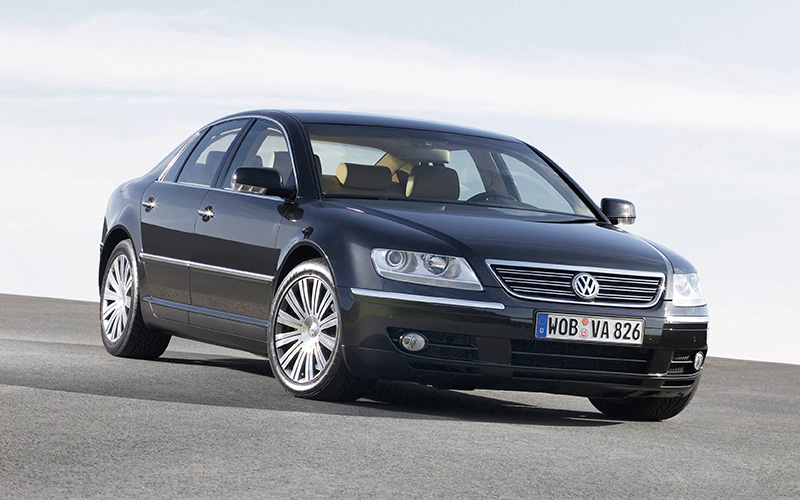
Piech was known as an exacting and sometimes intimidating boss. He obsessed over panel gaps, which he felt was a good proxy for attention to precision and detail overall. When he outlined his expectations for the Volkswagen Phaeton, unheard of levels of rigidity in a sedan and run all day at 186 mph in 122-degree heat, engineers quit rather than risk being unable to meet his seemingly unrealistic expectations. But the Phaeton, with its unconventional all-aluminum monocoque chassis and W12, proved to be every bit the car Piech had asked for.
The Phaeton ultimately proved a boondoggle of a project. Too expensive for Volkswagen’s typical buyers (priced at $60,000) and still “just a VW” to those with that kind of cash. But Piech top-down approach to parts sharing meant in reality the Phaeton wasn’t an expensive VW so much as it was a bargain Bently Continental.
No less ambitious but a good deal more successful was Piech’s stewardship of another VW brand, Bugatti. The Veyron’s top speed target of 407 km per hour might seem arbitrary but Piech set that specifically because that would best Peugeot’s record on the Mulsanne Straight at Le Mans (held at the Circuit de la Sarthe racetrack in France). Why did Piech care about this record? It had bested the prior record set by the Porsche 917. Piech made good on his grudge as the Veyron proved capable of 408 km per hour (253 mph).
Dieselgate Denouement
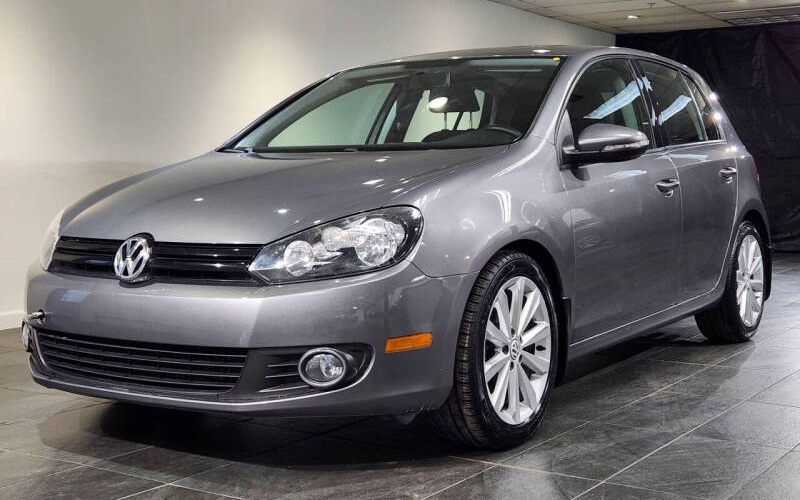
Piech managed to build Volkswagen Group into one of the two biggest car companies in the world, easily surpassing GM and rivaled only by Toyota, with whom VW traded the title of the largest carmaker back and forth for years. Piech legacy has largely been one success after the other, making Porsche into the racing behemoth it became, he took Audi from obscurity to one of Germany’s premier car brands (with plenty of racing success along the way), and grew Volkswagen into one of the industry’s true titans. The one asterisk to the story is a big one: the Dieselgate scandal, which came to light shortly after Piech’s retirement.
Volkswagen’s dodging of emissions regulations proved criminal, and the resulting fines and liabilities have cost the company roughly $33 billion dollars. While it remains unclear what Piech knew and when he knew it, many observers have at minimum blamed the corporate culture Piech instilled at Volkswagen, where standards were high, mistakes professionally fatal, and internal competition ran rampant. Corner-cutting what never Piech’s modus operandi, so it’s difficult to square a career of exactitude with the dereliction that was the Dieselgate scandal.
Either way, Piech’s contribution to and shaping of the automotive landscape cannot be underestimated, from making the 911 race-worthy to building Audi into Audi to making Volkswagen Europe’s largest car company.