

Latest News
2026 Subaru Crosstrek ReviewWhy Is Route 66 Famous?
Route 66 didn’t just take travelers from east to west, it offered passage to the heart of the American landscape.US Highway 66
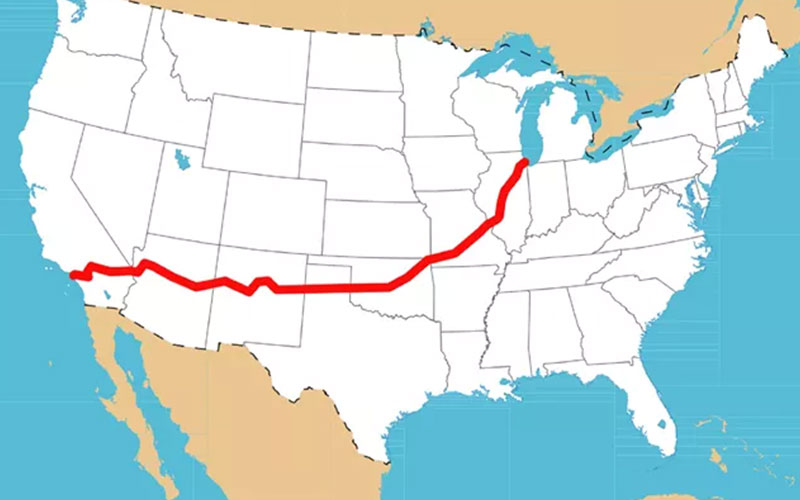
John Steinbeck called it the “Mother Road.” Route 66, stretching from Chicago in the Midwest to Santa Monica on the coast of California, was once a vital causeway for cross-country travel in the days before the interstate highway system. But it was more than just a road, it became an American icon, a symbol of promise, escape, and adventure. Though outmoded by the middle of the 20th century, what remains of Route 66 still draws travelers today, those who recognize that the journey is often more significant than the destination.
So, why is Route 66 famous? Let’s find out.
Beginnings
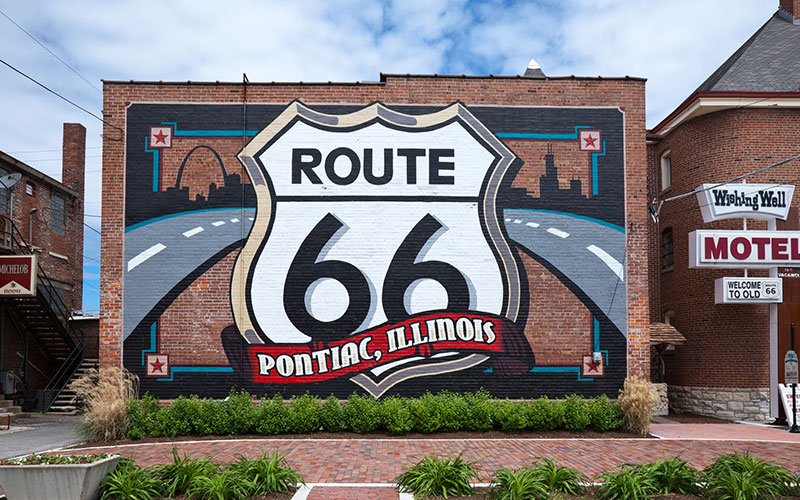
In the early 20th century, America’s rural roads and highways were a hodge-podge of roads, some paved, some merely graded, some little more than a dirt track. We owe the creation of Route 66 to two likeminded businessmen, each seeking greater economic opportunity for their respective cities. Cyrus Avery of Tulsa, Oklahoma and John Woodruff of Springfield, Missouri promoted the idea, founding the Route 66 Association. One early promotion included using the route as a major component of the “Bunion Derby” a transcontinental footrace from New York City to Los Angeles.
The planned route would make use of various existing roads and trails that snaked through the heart of the country. Not only would Route 66 connect Chicago with Los Angeles, it would connect all the towns, hamlets, and cities along the way, often coursing directly down those towns’ main streets. This would eventually earn it another nickname, “America’s Main Street.”
Economic Impacts
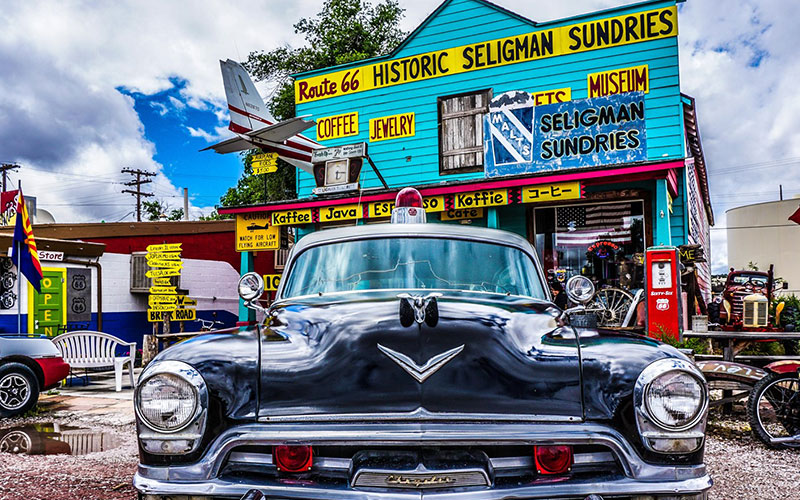
In 1926, US Highway 66 was officially recognized. Route 66 proved transformational for many of the towns it ran through. The southernly path meant easy year-round travel, and trucking traffic flourished on Route 66, connecting vibrant urban centers with formerly economically isolated rural towns. Gas stations, motels, restaurants, campgrounds, curios shops, and more sprang up along the highway. Roadside attractions sought to capture the attention (and the dollars) of travelers with all manner of novelty from museums to sculptures (an inordinate number being giant cowboys) to knickknacks. For many towns along the route, the highway was not just a boon, it was the economic life force of the community.
Historical Significance
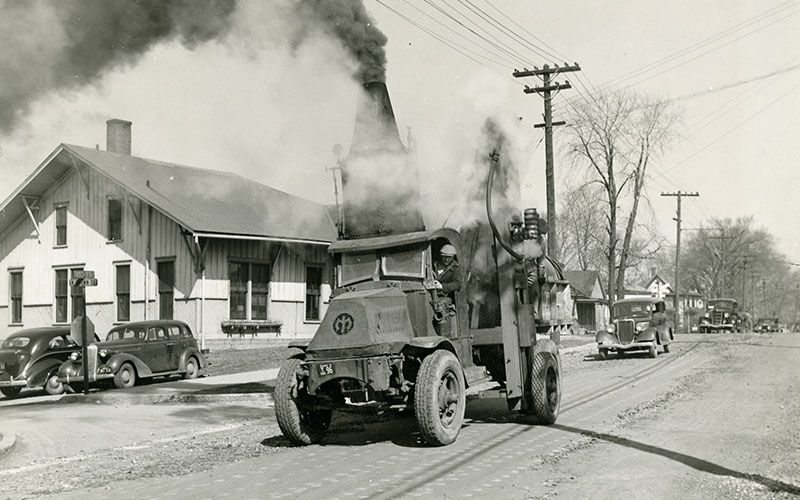
Route 66 received major upgrades as part of the New Deal’s make-work expansion of American infrastructure. The process of fully paving US Highway 66 began in 1933 and would take five years to complete. It was during these years that Route 66 played a pivotal part in the mass migration out of the country’s interior during the Dust Bowl, a devastating mixture of drought and manmade erosion that hobbled a region already teetering thanks to the concurrent Great Depression.
It’s estimated some 200,000 people left the Great Plains for California and the West Coast during the decade. In his novel “The Grapes of Wrath,” John Steinbeck tells the story of a family of tenant farmers, the Joads, as they leave Oklahoma for California. Their path? Route 66. This being a car blog, I’d be remiss if I didn’t note their convenance, a 1926 Hudson Super Six converted into a pickup. Indeed, many of these “Exodusters” were forced to carry all their worldly belongings lashed to the family’s sole vehicle. Photos from the period show vehicles overflowing with furniture, luggage, and family members.
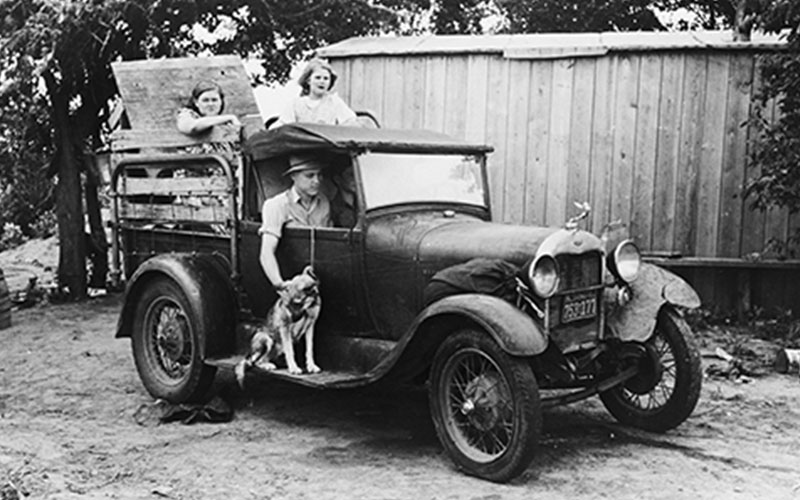
Motels and car camping were common overnight accommodations, but not everyone was welcome. Though most Route 66 didn’t traverse the South, segregation was still common and black Americans were often barred from restaurants, motels, and other establishments. As part of his 1936 Green Book, Victor H. Green listed black friendly lodging along Route 66.
The years following World War II would see another massive movement of people as returning soldiers resettled across the country and especially those traveling west to California. But even as Route 66 was reaching its apogee culturally and economically, it was slowly growing obsolete. The institution of the Federal Highway Act in 1957, under Pres. Eisenhower, was the beginning of the interstate highway system.
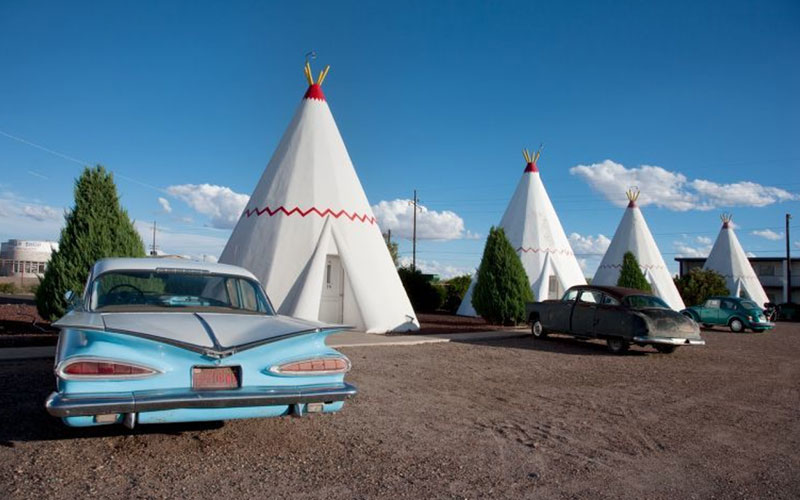
Section-by-section and year-by-year, the sometimes-circuitous Route 66 would be bypassed in favor of simpler, straighter routes. And while cities like Amarillo and Albuquerque were large enough to justify a connection along the interstate system, many smaller towns were not so lucky. Route 66 had been their economic lifeblood and without the traffic and travelers it had brought, these towns withered away (today Route 66 plays host to numerous ghost towns). In 1985, Route 66 was officially decommissioned, though many sections today are still maintained.
Cultural Legacy
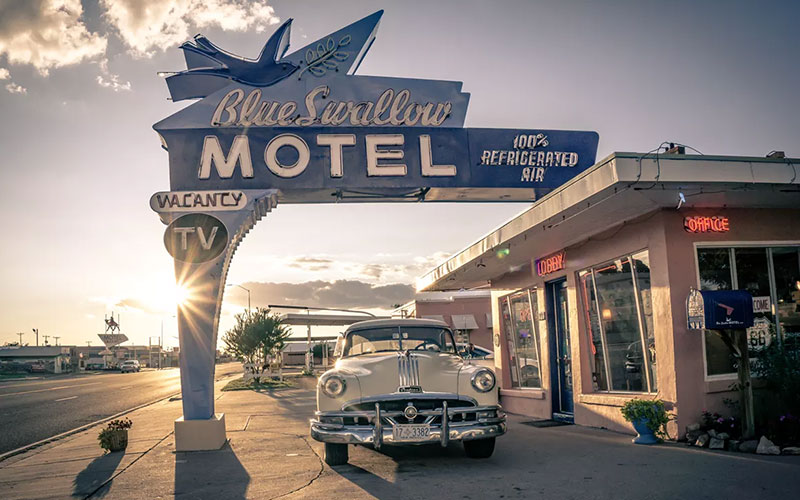
Today’s travelers of Route 66 take to the road for their own unique set of reasons. Some aim to recapitulate the journey of their forbearers who’d sought out a better life. Others to seek out the elusive heart of American, lost on some lonesome stretch of highway. Like so many before them, modern travelers of Route 66 can achieve a transformation by moving through the ever-changing landscape. And surely still more just “do it for the ‘gram.”
Route 66 is Americana at its best, a fusion of history and wide-open space, it’s kitschy, it’s rural, it’s escapist in all the right ways, it represents that quintessentially American notion of perpetual movement, the continual Great Becoming, that long gaze down the highway, firm in the conviction that some better life lies just over the next hill. For many a traveler, Route 66 was and is and will always be the route to reinvention.





Thank you for the good info on Route 66. My parents came out from Iowa to San Diego