
Latest News
2026 Ford Maverick ReviewThe Best Mid-Engine Cars of All Time
Moving the engine to the middle of a car has long been a hallmark of serious sports and racing cars. These are the cars that have done it best.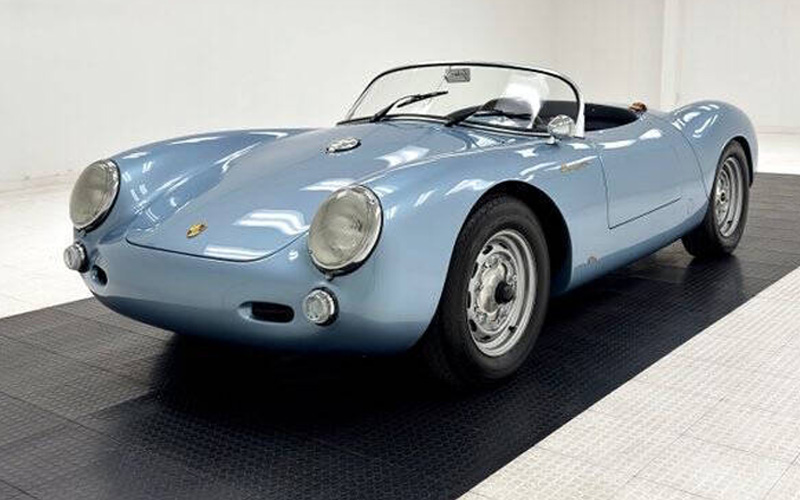
Finding the Perfect Balance
Front-engine cars being the norm, when engineers move the engine midship, as with the C8 Corvette, it’s a clear indication they’re making a serious sports car. Surveying the history of mid-engine cars, most have had sporting pretension, albeit with notable exceptions like the Fiero. Today’s cohort of supercars are almost exclusively mid-engine designs (excepting those that have gone full EV), while the design has fallen out of favor for mass-market cars, unofficially ending with the dissolution of the Toyota MR2 in 2007.
For most of automotive history, engines have been nestled ahead of the driver and behind the front axle. In the 1920s, racecar engineers began experimenting with positioning the engine behind the driver and in front of the rear axle with the Mercedes-Benz RH two-liter “teardrop” of 1923 being the first example. This mid-engine positioning provided greater weight balance front to rear, a major boon to handling. The design became increasingly popular in racing circles over the decades, adopted for cars like the Porsche 550 and Ferrari 246 SP, and finally making its way to production cars in 1962 with the Matra Djet, a French sports car.
Our list of the best mid-engine cars will cover not only spectacular sports cars but historically significant examples that might not have risen to that level of performance.
Porsche Boxter/Cayman
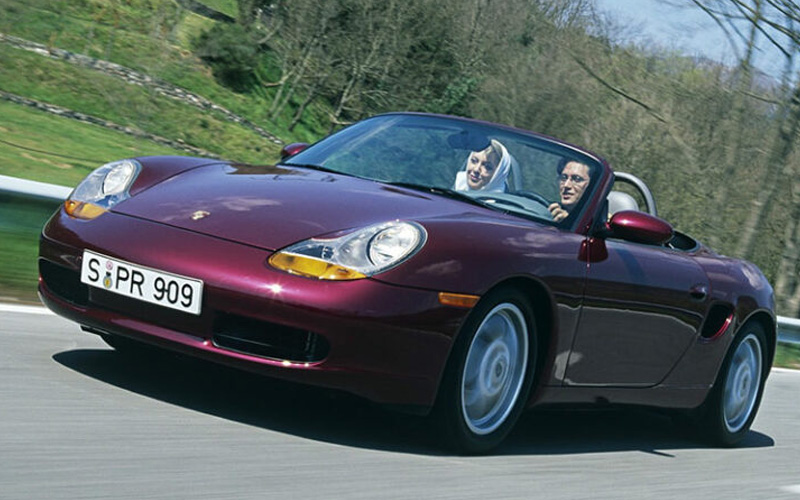
The 1980s had not been kind to Porsche. Sure, they had the 930-generation 911, the transaxle cars like the 928, and influential experiments like the 959, yet the company was not on a firm financial footing. Teetering on the brink, Porsche called in consultants from Toyota to help streamline their production. Meanwhile, designers set to work diversifying the lineup with new models that might broaden the appeal of the historic brand. The first fruit of that effort was the Porsche Boxster, a mid-engine roadster that would serve as a new entry-point offering below the flagship 911. Equipped with a 2.5L flat-six and superior balance thanks to its mid-engine design, the Boxster was a revelation when it came to handling.
The Boxster and related Cayman coupe were long relegated to second son status in the Porsche lineup as their rear-engine big brother the 911 was graced with larger engines and slicker styling. And yet, as the years have gone on, Porsche’s engineers and executives have seen the virtues of the mid-engine design. As is the won’t of Porsche, they’ve continued to improve the Boxster/Cayman, adding new tech and larger engines, to the point that today’s mid-engine Porsches are every bit as good as or arguably better than the rear-engine 911.
Toyota MR2
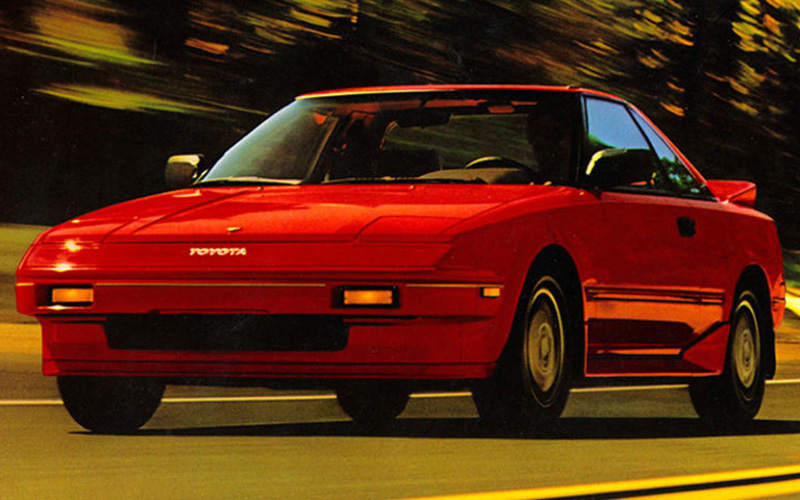
The 1980s and ‘90s was a period of bold risk-taking among Japanese automakers that culminated in a golden era of sports cars that still influences global car culture today. For the RX-7, Mazda went out on a limb and chose a Wankel rotary engine as its powerplant, Honda developed their ingenious VTEC system, and in 1984 Toyota made the mid-engine leap with the MR2. With a 1.6L four-cylinder, the MR2 wasn’t the fastest car in a straight line, but its mid-engine design made it a playful and challenging car to drive. Indeed, the first generation became notorious for lift-off oversteer when driven to the limit. Though that wrinkle was eventually ironed out during the second generation, the MR2 remained a uniquely spirited drive through its third and final generation.
Pontiac Fiero
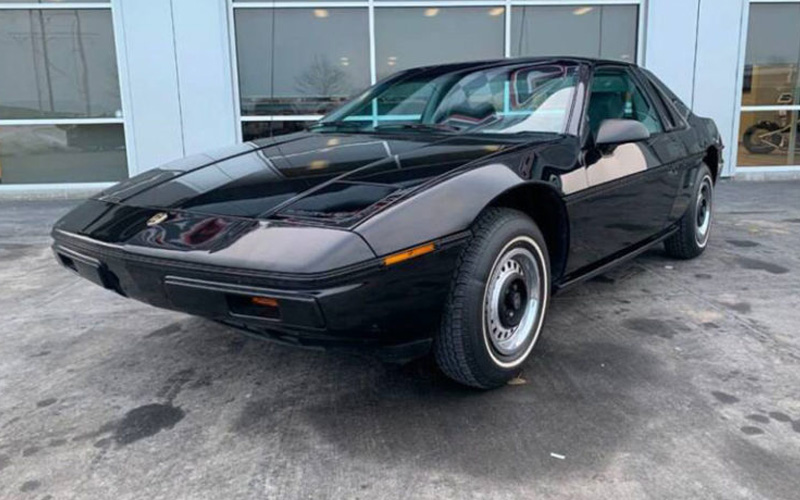
Not every notable mid-engine car was a resounding success. The Pontiac Fiero etched its place in automotive history thanks to a consequential bit of poor engineering. The Fiero was a cool idea on paper combining mid-engine dynamics with the affordability of a parts-bin special. One of those borrowed bits was the four-cylinder Iron Duke, known for its high fuel economy though not its power. Fatefully, the Iron Duke was given a smaller oil pan as part of the retrofitting for the motor to slot into the Fiero’s narrow engine bay. The novel and sporty-looking Fiero sold well in its inaugural 1984 model year, selling over 136,000 units. That model was recalled three years later due to the Fiero’s uncanny ability to self-immolate.
The Fiero’s tendency to catch fire came from a combination of defective connecting rods, poor engine casting, and insufficient oil pressure. Poor lubrication (remember the smaller than spec oil pan?) resulted in connecting rod failures, which in turn caused oil to leak onto the engine block, igniting the oil. GM fixed the problem on subsequent model Fieros, but the reputational damage was done, and the car was canceled due to poor sales. It took three decades before GM returned to a mid-engine design with the C8 Corvette.
McLaren F1
The supercar came into its own during the 1980s. Of course, one can point to earlier examples like the Mercede-Benz 300 SL gullwing or Lamborghini Miura, but the heights of 80s excess were best mirrored in cars like the Lamborghini Countach, Ferrari F40, and Porsche 959. Supercars force us to reimagine what was possible and what was cool with their radical styling, next-level tech, and blistering speed. They were also, of course, outrageously expensive.
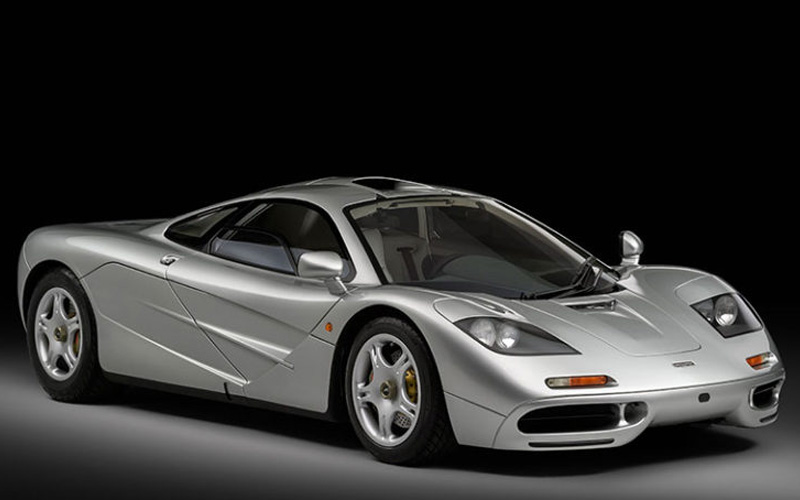
So when British racing team McLaren wanted to get in on the burgeoning supercar market, they pulled out all the stops to allow chief engineer Gordon Murry to build no less than the world’s greatest car. In doing so, McLaren gave birth to an even more rarified kind of performance car, the hypercar. They named it after their preferred racing series, F1.
The McLaren F1 entered production in 1992 as a technological marvel. The F1 was built using a carbon fiber monocoque chassis, a first for a production car and now de rigueur for supercars today. In addition to the carbon fiber, the F1 was chockablock with lightweight materials like Kevlar, aluminum, and magnesium. The mid-mounted, naturally-aspirated 6.1L V12 was developed by BMW for the F1 project. It produced 617 horsepower, enough to power the F1 to a world record 240 mph top speed making it the world’s fastest production car, a claim it retained for a full decade. The McLaren F1 still holds the honor as the fastest naturally aspirated car of all time.
Ferrari F40
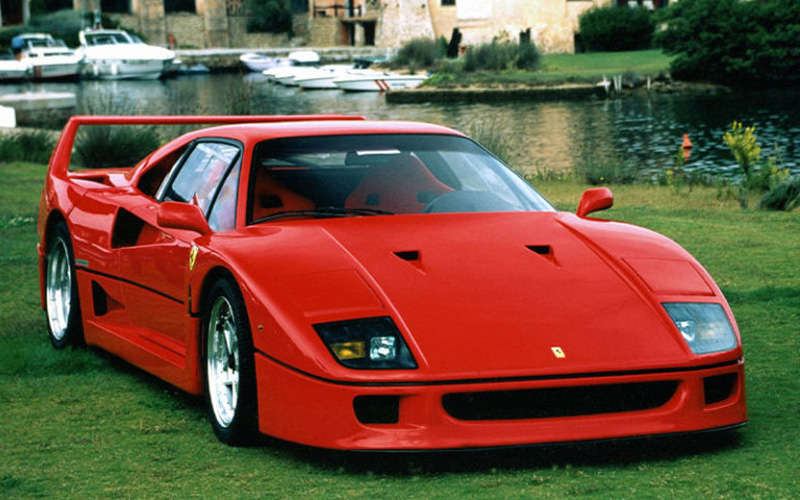
Now, from the fastest to the prettiest. By the time the F40 arrived in 1987, Ferrari had decades of experience with mid-engine cars. All that practice helped make the F40 an absolute masterpiece of engineering and design. The F40 was intended as both a capstone on Enzo Ferrari’s career and a commemoration of the company’s 40th anniversary. The F40 indeed represented Ferrari at its best. Midship was the F40’s 2.9L twin-turbocharged V8 making 475 horsepower (Ferrari claimed a 200-mph top speed). The F40’s stunning looks were provided by long-time Ferrari collaborators Pininfarina who gave the supercar a Coke bottle pinched waist, huge rear wing, distinctive round taillights, triple tailpipes, and NACA ducts among its many visual flourishes. The only color available: Rosso Corsa Red.
Bugatti Chiron
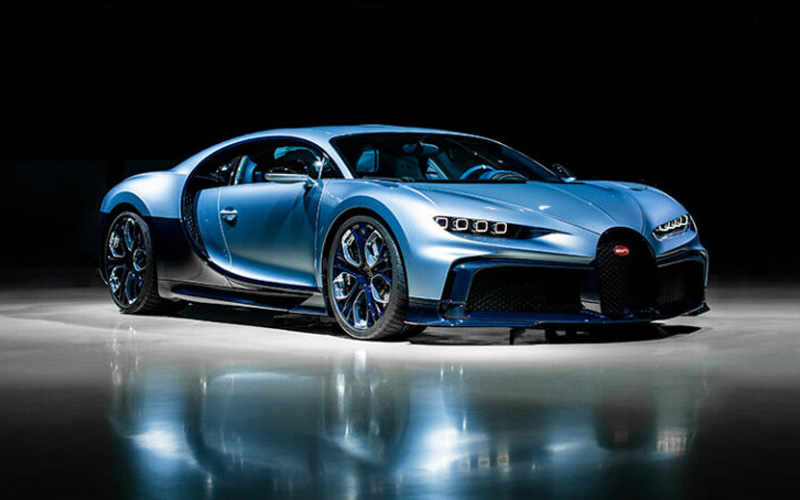
When Volkswagen acquired the Bugatti brand in 1998, the goal was to produce a worthy successor to the EB 110. That successor, the Veyron, introduced the world to the WR16, one of the wildest engines ever conceived. The massive 8.0L W16 (basically two V8s married together) featured quad turbocharging, 64 valves, 987 horsepower, and was located midship. By the time the Chiron rolled around, the engine would be tuned for even more power, eventually cresting at 1,580 horsepower for its record-breaking run in the Chiron Super Sport 300+ which set a new record as the world’s fastest car with a run topping 304 mph. Throughout its eight-year production, the Bugatti Chiron was the benchmark by which every other hypercar was measured. It was wildly expensive, insanely fast, and meticulously constructed, a hand-build masterpiece of automotive craftsmanship.
C8 Corvette
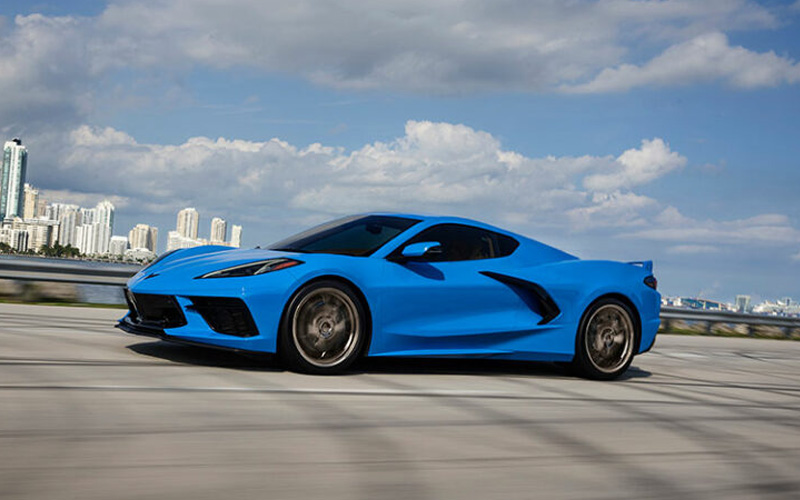
The current eighth-generation Corvette, which kicked off in 2020, is a radical departure from the Corvettes of the past. It’s got supercar looks and supercar speed; most significantly, its engine is positioned like a supercar, in the middle. It turns out engineers, including the “Father of the Corvette” Zora Arkus-Duntov, had dreamt of making the Corvette a mid-engine car going all the way back to the planning stages for the C2 Corvette. When news began leaking that the C8 would at long last make the switch, Vette fans had one almost universal reaction: “Finally! But also, is it still a Corvette? And also, can I fit two golf bags into the front trunk?” Leave it to Corvette fans to be both philosophical and practical at once.
The Corvette makes the most of its new mid-engine design with greater controllability and superb handling. Tucked behind the driver in the base Stingray is a 6.2L V8 making 490 horsepower. The Z06 swaps in a naturally-aspirated flat-plane crank 5.5L V8 making 670 horsepower. The E-Ray hybrid adds an electric motor to the front axle to supplement the 6.2L motor for a total 655 horsepower and a zero to sixty run of just 2.5 seconds. The new ZR1, arriving for the 2026 model year, takes things up yet another notch by twin-turbocharging the 5.5L V8 to an absurd 1,064 horsepower and 828 lb.-ft. of torque. It rips from zero to sixty in a mere 2.2 seconds. That makes the ZR1 Corvette quicker than supercars like the Ferrari SF90 and McLaren 750S. In fact, it’s the quickest RWD production car of all time.
Is the mid-engine C8 Corvette still a Corvette as we’ve traditionally known it? May not. And yet, in making the switch to a mid-engine design Chevrolet has ensured the C8 Corvette continues to fulfill the C1 Corvette’s original mission: make an American version of the best European sports cars of the day, but better.