
Latest News
2026 Ford Maverick Review
Soichiro Honda combined enthusiasm and engineering to build the world’s largest motorcycle maker and automotive titan.
Of Passions and Pistons
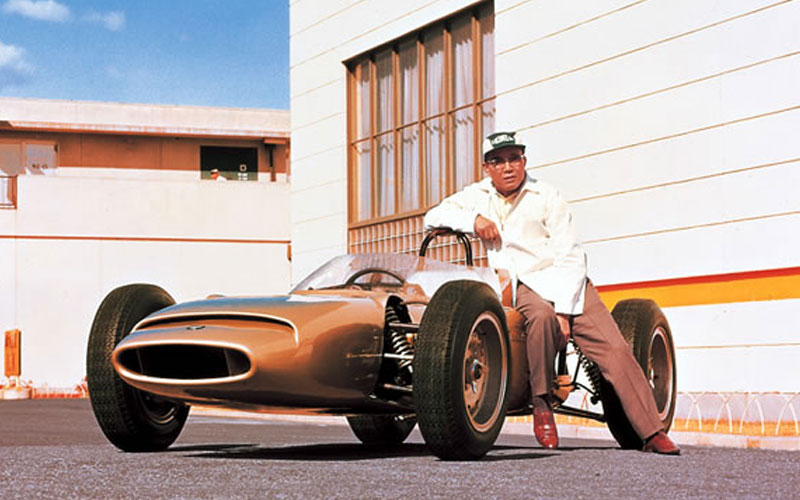
Among the characters that populate the pantheon of automotive history there are principally two types. The first type is committed, detail obsessed, and intent from the start to rise as far and fast as possible in the automotive world. Two vastly different men who fall into this first category are Henry Ford and John DeLorean. The second type is driven, literally and figuratively, by a passion for automobiles. Drivers and engineers, their love of cars and competitive spirit resulted in historic achievements. The likes of Enzo Ferrari, Carroll Shelby, and Soichiro Honda all fall into this latter category.
Honda’s obsession with cars began at a young age, for both him and the automobile. As a boy, his first encounter with a Ford Model T captivated his imagination. The smell of oil and gasoline, he recalled, had the quality of a perfume.
Early Days
Born in 1906 in Hamamatsu, Japan, Soichiro Honda was the son of a blacksmith, Gihei Honda. His father’s business primarily consisted of buying old bicycles and fixing them up to sell for a profit. While Soichiro found interest in mechanical things, he was not an enthusiastic student.
In one widely circulated and revealing anecdote, young Soichiro’s school required homework to be stamped with the family seal to prove parents had seen and approved the work. The industrious Soichiro fashioned a replica stamp from a bicycle pedal for his own homework. So successful was this ruse that he began making them for his fellow students. His failure to transpose the images of other family names on the stamps had him finally found out.
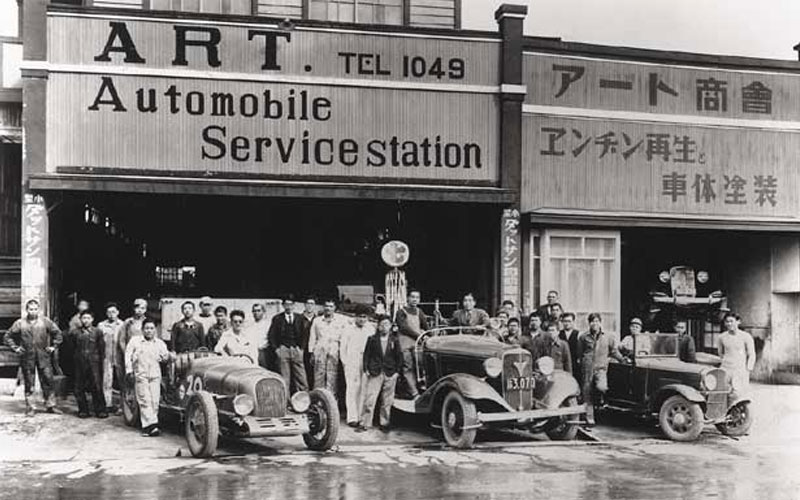
Soichiro’s life-long enthusiasm for cars manifested itself early when, at the age of fifteen, he left home for Tokyo and a job working as a mechanic at Art Shokai auto repair. Over the years, Soichiro rose from doing tasks around the ship to mechanic, eventually working on racecars. So well liked was he by his bosses, Soichiro was given a chance to open his own Art Shokai shop back home in Hamamatsu at the age of just 21.
Initial Ventures
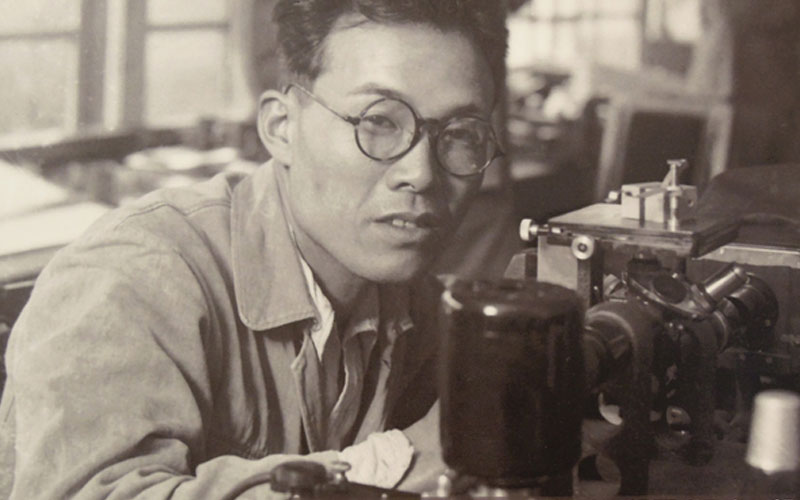
The young Soichiro was not just an ambitious businessman or mechanic. He was also a dedicated engineer, fashioning his own designs for parts, often patenting his innovative designs. His design for cast-iron spoked wheels, at a time when many automobiles still rolled around on wooden wheels, proved especially lucrative.
His successes allowed for a fast lifestyle. Soichiro became known as a prodigious drinker and carouser, frequenting geisha houses and indulging in his passion for motorcycles and racing. A crash in 1936, at the wheel of a Ford racecar, resulted in injuries for both he and his brother and led to Soichiro swearing off competitive racing.
In 1937, Soichiro Honda founded his first independent business, Tokai Seiki, a parts fabricator specializing primarily in piston rings. An initial contract with Toyota resulted in failure when the carmaker rejected the delivered piston rings as lacking in the requisite quality. Undeterred, Soichiro redoubled his efforts, attending university engineering classes and researching Toyota’s high-quality manufacturing processes. With the implemented improvements, Honda was able to recapture his contract with Toyota, eventually supplying around 40% of the company’s piston rings.
The War Years
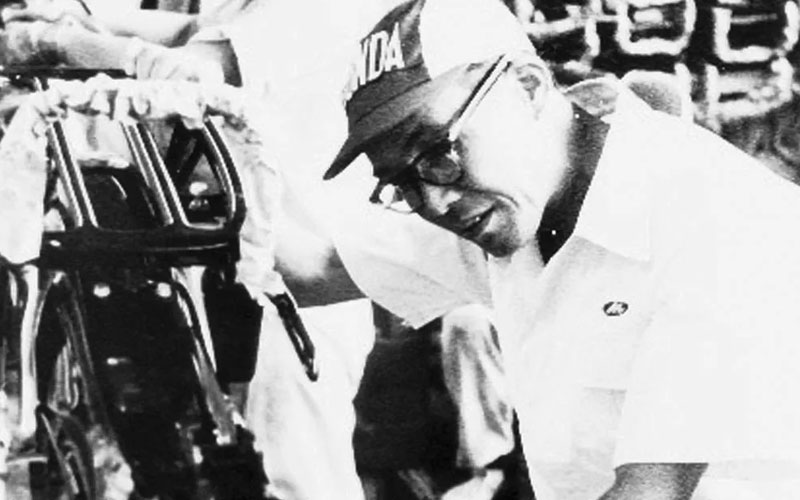
War contracts kept Honda’s company humming along, producing engines for air and naval craft. Naturally, this led to an Allied bombing raid that destroyed his Yamashita plant in 1944. An earthquake collapsed his other plant in Iwata in 1945. Either one of these would have been a major setback, together they were fatal for Tokai Seiki and Honda sold out what remained of the company to Toyota.
Soichiro took the proceeds from the sale to start another venture, Honda Technology Research Institute, in October of 1946. Here Soichiro combined his mechanical ingenuity with his love of all things fast, using war surplus two-stroke generator motors, Honda powered bicycles to build simple, cheap motorcycles, a perfect solution for affordable urban mobility in bombed-out post-war Japan.
Honda Motor Company
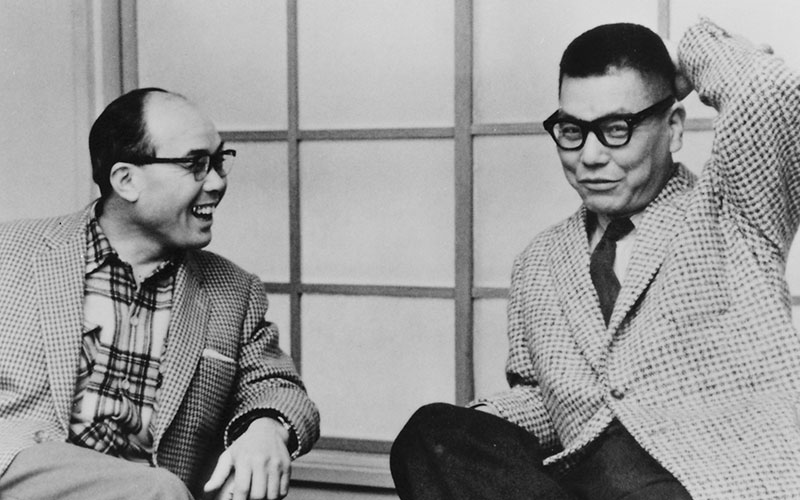
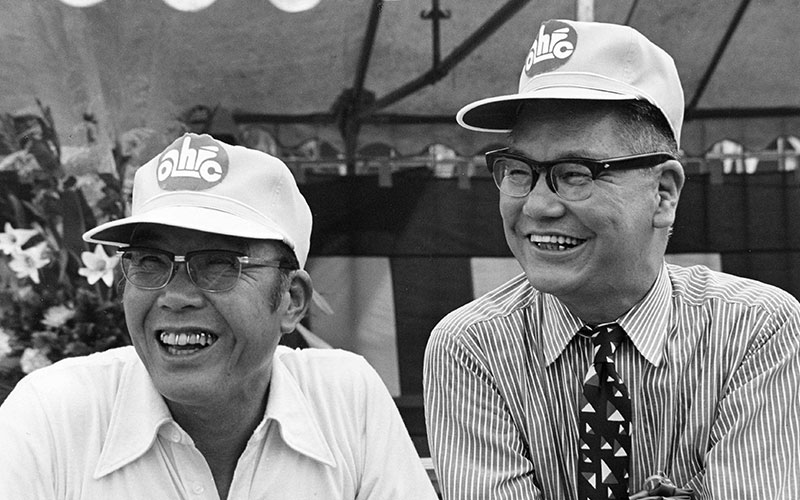
In 1948, Soichiro partnered with his friend Takeo Fujisawa to found Honda Motor Company, with Fujisawa concentrating on the business and financing of the company while Honda poured his efforts into engineering and design. Their first major release was the Honda D-Type motorcycle.
Honda’s approach to management differed from what was typical. In most Japanese companies, hierarchy and a commitment to collective harmony prevailed. At Honda, Siochiro fostered an environment of personal achievement, encouraging innovation at every turn.

The approach was wildly successful for Honda Motor Company as they quickly rose to become not just the biggest motorcycle maker in Japan, but by 1959, the largest motorcycle maker in the world. That same year, Honda opened its first dealership in the US. In 1963, Honda branched out to building automobiles, the first of which was the T360 mini truck. Their first road car, the S500 sports car soon followed. The first Honda car to arrive in the US was the N600 hatchback, debuting in 1969 (as a 1970 model year).
Retirement Years
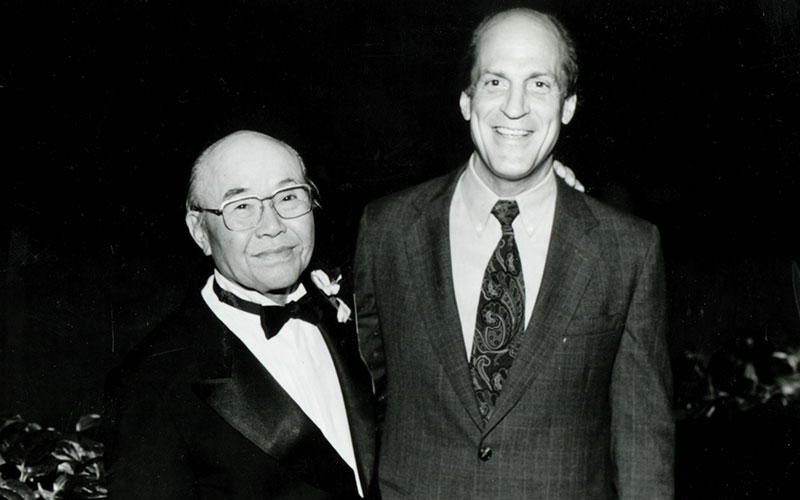
The Honda Civic was released in 1972 and was the last project that Soichiro would have a hand in developing. He retired from Honda Motor Company in 1973, staying on in an advisory capacity for another ten years. Soichiro spent his retirement pursuing his interests in hang gliding, motorcycle riding, even ballooning. Soichiro Honda was inducted into the Automotive Hall of Fame in 1989. He passed away, at the age of 84, in 1991.